General Information
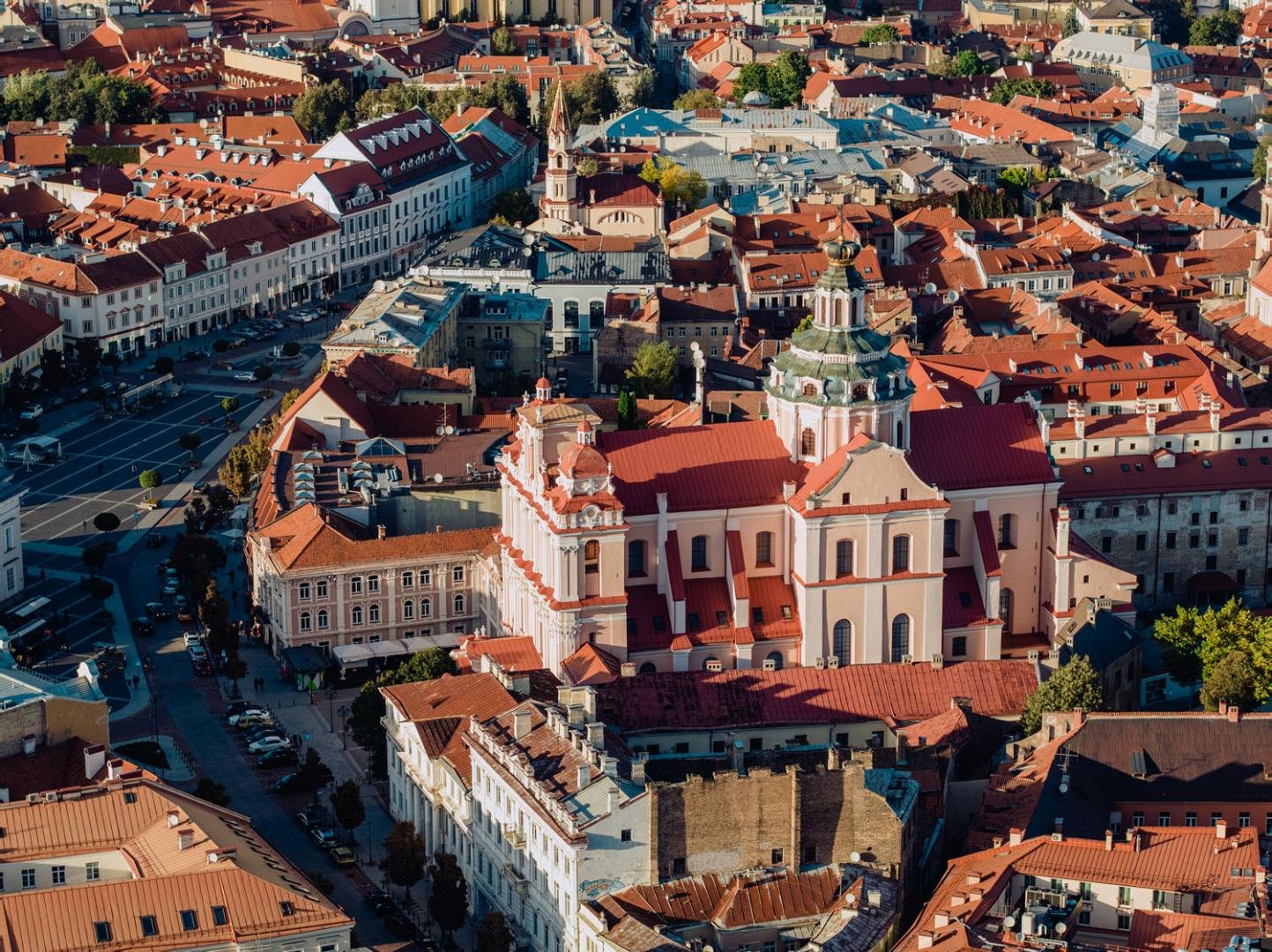
Lithuania, officially the Republic of Lithuania, is a country in the Baltic region of Europe. It is one of three Baltic states and lies on the eastern shore of the Baltic Sea, bordered by Latvia to the north, Belarus to the east and south, Poland to the south, and the Russian semi-exclave of Kaliningrad Oblast to the southwest, with a maritime border with Sweden to the west. Lithuania covers an area of 65,300 km2 (25,200 sq mi), and has a population of 2.9 million. Its capital and largest city is Vilnius; other major cities include Kaunas, Klaipėda, Šiauliai and Panevėžys. Lithuanians are the titular nation, belong to the ethnolinguistic group of Balts, and speak Lithuanian.
- Population: 2,800,000+
- Area: 65,300 km²
- Coordinates: Latitude: 54.683334350586, Longitude: 25.316667556763
- Timezone: Timezone info not available
- Current Local Time: ailab
Latest Lithuania News
BBC News
Spanish PM Sánchez calls early election after housing protests
Sánchez says Spain will head to the polls on 29 November after recent defeats on measures aimed at addressing the country's housing crisis.
BBC News
Kyiv bridge hit in further Russian drone attack as German chancellor makes surprise visit
Footage shows a drone hitting the Pivnichyi (Northern) Bridge as vehicles move across it, creating a large fireball.
BBC News
Average five-year mortgage rate hits 6% for first time in three years
The cost of a new fixed-rate mortgage has been rising in recent weeks as lenders face higher costs.
BBC News
BT agrees rescue deal to buy broadband operator TalkTalk
The takeover still needs to be approved by the regulator, but would give certainty to TalkTalk's millions of customers
POLITICO
Sánchez bets it all on housing ahead of Spain’s snap election
Spanish Prime Minister Pedro Sánchez hopes his country’s dire housing crisis has become so bad that it overshadows the other challenges Spain faces. Nationwide protests over skyrocketing rents and real estate speculation have rocked Spain in recent weeks, prompting the Socialist leader to call snap elections for Nov. 29 on Monday. Sánchez, who is under pressure over the ongoing migrant crisis in Ceuta, as well as corruption cases involving members of his family and close political allies, is aiming to capitalize on popular discontent over housing to pull off a long-shot reelection — while portraying Spain’s conservative opposition as an obstacle to solving the problem. But critics have questioned the wisdom of the prime minister casting himself as a champion of housing rights when his time in power has coincided with a deepening of the current crisis. Valeria Racu, spokesperson for the Spanish Tenants’ Union, which has spearheaded the housing protests, said Sánchez had “no track record to boast about” and called his Socialist Party “a party of landlords.” “We’re done with these politicians,” she added. “We’re not falling for their nonsense anymore.” Pablo Simón, a political scientist at Madrid’s Carlos III University, thinks the prime minister’s electoral bet made sense. “The current outlook for Sánchez is dire,” he said. “Even if you ignore the migrant crisis in Ceuta — which isn’t going to be solved anytime soon — and the ongoing corruption cases, he’s still leading a minority government that can’t pass any legislation, with negative inflation steadily undermining his claim that Spain is doing great in economic terms.” By making the election about housing, Simón added, the prime minister is seeking to shift the conversation away from corruption in his inner circle and the national defense issues surrounding Spain’s North African exclaves, and toward the social issues championed by the left. A nationwide crisis Spain’s housing crisis is rooted in the aftermath of the 2008 financial crisis, when banks sharply restricted mortgage lending to ordinary families. “The cash didn’t disappear from the market, it just ended up in the hands of investors,” said Spanish National Research Council housing expert Javier Gil. “What we see in Spain is a new cycle led by speculative, non-residential demand.” That cycle resulted in a “tenant generation” unable to access home ownership not simply because of a lack of housing, he added, but because high-income investors have bought homes as assets. The scale of the crisis is stark. Between 2015 and 2025, average home prices in Spain rose by 80% and rents shot up by 87%, while salaries increased by only 30%. The price hikes have been particularly punishing for young Spaniards. According to the latest figures from Spain’s National Statistics Institute, 69% of Spaniards aged 18 to 34 live with their parents — a rate surpassed only by young people in Croatia. The same tourism boom that resulted in generated €200.7 billion in 2024, equivalent to 12.6% of GDP, has drawn real estate investors to major cities and tourist destinations. Although Sánchez’s government has taken steps to rein in the short-term rental market, the number of nights spent in tourist apartments has doubled since he took office in 2018. Population growth has added pressure in major urban centers. Spain has gained more than 3 million residents since 2015, including 793,000 in Madrid, 556,000 in Barcelona and 279,000 in Valencia — all cities where housing costs have risen sharply. Sánchez has not been blind to the crisis, calling housing the country’s “great constitutional challenge.” In 2023, he pledged to use “all state resources” to provide 184,000 public and affordable rental homes. But when the government last provided a detailed accounting of the effort, in August 2024, it said only 14,000 homes had been “made available to citizens” through a social scheme. Some 60,000 other properties were reported to be in various stages of development. The recent rollout of the government’s new housing portal, CASA47, was similarly underwhelming. It initially listed just 638 homes, none of which were in markets like Madrid or Barcelona, where the crisis is particularly acute. “Sánchez’s Socialist Party has spent years claiming to want to tackle the housing market, but in practical terms it’s followed the same approach as right-wing parties,” Gil said. “They’ve avoided questioning the status quo or proposing structural limits or transformations.” Even last week’s housing decrees — which included plans to curb speculative practices, extend eviction protections for vulnerable tenants until 2030 and automatically renew existing rental contracts, and which were ultimately rejected by lawmakers — contained only minimal measures unlikely to substantially address the crisis, Gil added. “There’s a clear disconnect with the public mood,” he said. “Right now there is a widespread feeling in society that people have had enough and want greater market intervention.” Questionable pivot Despite his mixed record on the issue, Sánchez is determined to campaign as a housing champion. Before parliament is dissolved, he plans to have the Council of Ministers reapprove the housing bills rejected by lawmakers last Friday. The measures could then be voted on by the legislature’s standing committee, which remains active after dissolution. The move, which is clearly aimed at keeping the issue alive ahead of the election, has been denounced as a cynical ploy by Spain’s conservative opposition. Center-right People’s Party lawmaker Cayetana Álvarez de Toledo last week said the government’s only substantial housing measure had been “giving a whore an apartment in the Plaza de España,” referring to allegations that former Transport Minister José Luis Ábalos used kickbacks to finance a flat for his mistress. Ábalos, who was sentenced to a 24-year prison sentence after being convicted of influence peddling and other crimes in June, denies the accusation. The far-right Vox party has likewise ridiculed Sánchez’s housing pivot, arguing that the government’s migration policies made the housing shortage worse and saying Sánchez should instead focus on the needs of Ceuta’s residents. The attacks illustrate how difficult it will be for Sánchez to keep the election debate focused on housing rather than corruption and migration. “It’s obvious he doesn’t have a great track record on housing, but he’s trying to do his best with the electoral cards he’s been dealt,” Simón said. He predicted the Socialist leader would campaign less on specific measures than on broad social issues and the threat posed by the rising far-right. “He did this in the last election, in which he sidestepped a review of his government’s performance and centered the conversation on the implications of a PP-Vox government,” he said. “Housing is the pretext to call the election and center the conversation on social issues.” It’s unclear whether that strategy will appeal to the thousands of Spaniards who have taken to the streets over the past week. Racu said the Tenants’ Union wants politicians to commit to enacting indefinite rental contracts, legally mandated rent reductions, an end to evictions and speculative purchases, and a major expansion of public housing by reclaiming homes held by banks and investment funds. She declined to say what protesters should do if none of the parties running in the election commit to meeting their demands. “Voting is important, it’s a right that was won through bloodshed, suffering, and violence in the face of the Francoist dictatorship,” she said. “But democracy and people’s power reside in much more than a vote every four years.” “In eight days of people power, we have done more for housing than eight years of progressive government,” Racu added. “Whoever governs, this is not going to stop. Politics is returning to where it always should have been: the streets and the people.”
POLITICO
Merz and Macron want the EU to hit back harder — and faster — against trade threats
BERLIN — The European Commission needs the power to act much faster against trade threats, German Chancellor Friedrich Merz and French President Emmanuel Macron urged in a joint letter on Monday. In the letter — which was accompanied by a joint position paper — the two leaders said the EU faced unprecedented challenges. “The open and rules-based trading system is massively affected by weaponization of trade, systemic market-distorting practices and global macroeconomic imbalances,” they wrote. While the letter doesn’t mention China by name, it is clearly related to the bloc’s €1-billion-a-day trade deficit with the world’s leading exporter. It calls for urgent action, saying the EU’s existing trade defense toolbox “does not suffice anymore.” “Without delaying the full use of the existing set of instruments, we need a comprehensive framework to complement our toolbox with new legal instruments — in a lean and non-bureaucratic way,” they wrote. The leaders of the EU’s two largest economies want a new tool that would empower Brussels to exclude imports from certain countries. The proposal arrives before Trade Commissioner Maroš Šefčovič flies to Beijing for talks on Thursday, the final round of a four-month process in which Brussels hopes to rebalance its trading relationship with China. The Anti-Coercion Instrument, also known as the EU’s trade “bazooka,” in theory gives the Commission enormous powers to restrict imports in response to actions that are considered economic coercion. But in practice, activating it would require months of investigation and the support of a qualified majority of EU governments. Divisions among capitals have previously complicated efforts to agree on trade measures targeting China. The new instrument would make it much harder for member countries to block swift action. Commission measures would stand unless a “reverse” qualified majority of countries voted to block them, a senior German official explained. France and Germany want “a tool that doesn’t yet exist — and doesn’t even have a name — but which is intended, so to speak, to ensure that we have a level playing field,” said the German official, who spoke on condition of anonymity, describing the tool as a “second-strike weapon.” The document is part of broader Franco-German negotiations on the EU’s top economic files. The talks were launched by Macron and Merz after a joint ministerial meeting in Cologne in July, when the two leaders said they were converging on a more aggressive stance toward China. EU leaders will discuss the outcome of Šefčovič’s China trade talks at a summit in Brussels next week.
Al Jazeera – Breaking News, World News and Video from Al Jazeera
Is Iran charging a toll to allow oil traffic through Hormuz?
Crude exports bypassing Hormuz surged in September, yet oil prices remain high. Could a secret fee be the reason?
Al Jazeera – Breaking News, World News and Video from Al Jazeera
Before UK Greens, who else has equated Zionism with racism?
Israel condemns the move as the party's vote causes an uproar, including among party members.
Europe
Euro slides to 17-month low against dollar
High energy prices and concerns over France’s public finances add to pressure on the single currency
Europe
Russia’s ‘shadow war’ with Europe enters new phase, Germany warns
Berlin spy chiefs say Moscow is plotting more deadly and provocative attacks on Nato soil than at any point since 2022
France 24 - International breaking news, top stories and headlines
Trump heads to Nebraska as Republicans fear strongholds could flip
US President Donald Trump will visit Nebraska on Monday to rally Republicans and promote his economic record, taking his message of new investment and manufacturing to a state where farmers and truckers face sharply higher diesel prices and voters worry about inflation. His stop in the city of Grand Island is part of Trump's 32-day sprint to the November 3 midterm elections, a campaign in which he is spending considerable time in Republican strongholds. Trump has urged Republicans to “pretend” he is on the ballot, arguing that voters should view the midterms as a referendum on his administration and economic record. France 24's Fraser Jackson has more.
France 24 - International breaking news, top stories and headlines
France high school protests: Can the government regain control?
Up to 500 schools are expected to be totally or partially closed in France as student protests continue to rock the country. The demonstrations, which have been going on for over two weeks, have spread nationwide and are set to continue and the unrest appears to have caught the Macron government off guard. The protests have confronted French security forces with a daunting task, and the situation is likely to feature at this week's cabinet meeting, where the interior and justice minister will warn that there are few police resources to deploy.
Africanews RSS
Pix of the Day, 5 October, 2026 - Across the world
Pix of the Day, 5 October, 2026 - Across the world
Africanews RSS
Nobel Prize in medicine awarded to three scientists for breakthrough research
The Nobel Prize in medicine was awarded Monday to three scientists working on the mechanisms the brain uses to switch on, or off, the activity of individual nerve cells.