General Information
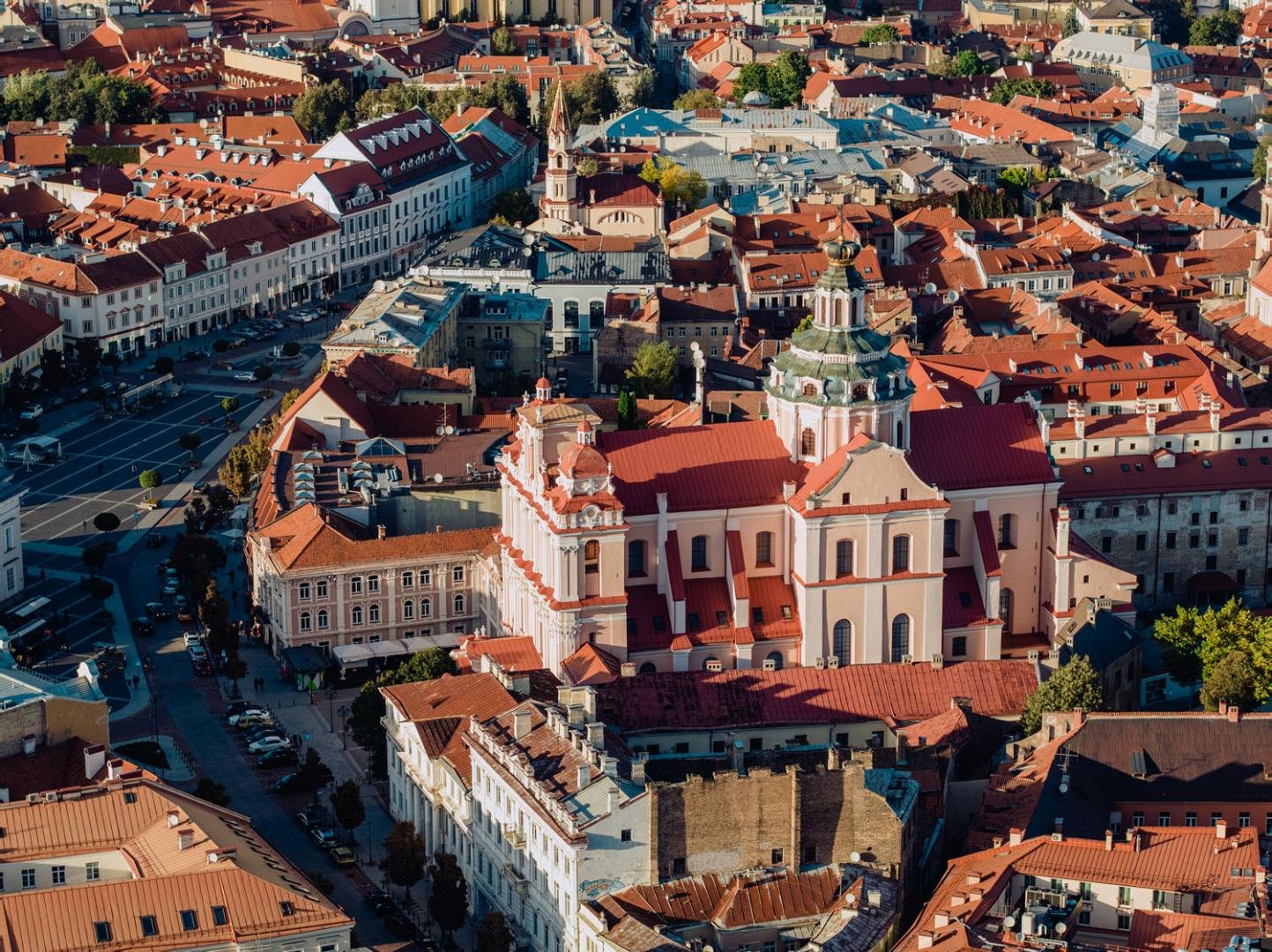
Lithuania, officially the Republic of Lithuania, is a country in the Baltic region of Europe. It is one of three Baltic states and lies on the eastern shore of the Baltic Sea, bordered by Latvia to the north, Belarus to the east and south, Poland to the south, and the Russian semi-exclave of Kaliningrad Oblast to the southwest, with a maritime border with Sweden to the west. Lithuania covers an area of 65,300 km2 (25,200 sq mi), and has a population of 2.9 million. Its capital and largest city is Vilnius; other major cities include Kaunas, Klaipėda, Šiauliai and Panevėžys. Lithuanians are the titular nation, belong to the ethnolinguistic group of Balts, and speak Lithuanian.
- Population: 2,800,000+
- Area: 65,300 km²
- Coordinates: Latitude: 54.683334350586, Longitude: 25.316667556763
- Timezone: Timezone info not available
- Current Local Time: ailab
Latest Lithuania News
15min.lt RSS - suprasti akimirksniu | RSS
Linas Kukuraitis: Kauno Krikščioniškuose gimdymo namuose bus toliau priimami gimdymai
Sveikatos apsaugos ministras Linas Kukuraitis antradienį pranešė, kad Kauno Krikščioniškuose gimdymo namuose bus toliau priimami gimdymai.
15min.lt RSS - suprasti akimirksniu | RSS
JAV planuoja su Ukraina ir Rusija aptarti ribotas paliaubas
Į Kyjivą atvykę JAV prezidento specialieji pasiuntiniai Steve'as Witkoffas ir Jaredas Kushneris su Ukrainos prezidentu Volodymyru Zelenskiu bei jo derybų komanda aptarė įvairius būdus, kaip būtų galima pasiekti ribotas paliaubas su Rusija. Apie tai, remdamasis dviem derybose dalyvavusiais Ukrainos pareigūnais, rašo „The Atlantic“ žurnalistas Simonas Shusteris.
BBC News
Spain announces ban on evictions after protests over 87-year-old woman's removal from flat
The ban is part of a number of proposals that must be approved in parliament within 30 days.
BBC News
French hard-right leader accuses opponents of 'total war' after claims of antisemitism
National Rally President Jordan Bardella says he will sue for libel over comments he is accused of making as a young activist.
BBC News
Faisal Islam: Triple lock move is significant, but it's a gamble
I had expected him to try to forge a political consensus on this thorny issue at this stage, but he has gone further than that.
BBC News
Oura pulls $15bn stock market listing days after announcement
The wearable technology company had been expected to list its shares in the US.
POLITICO
Burnham tried to plot the next 7 years of UK politics in one speech
LIVERPOOL, England — Just a few days ago Andy Burnham tried to kill off chatter in his party about a general election, insisting he would serve out the existing mandate until 2029. Yet the new British prime minister’s first speech to his party conference on Tuesday fired the starting gun on that same election, by raising four of the most seismic issues in British politics — then punting them until after it happens. With somber and slow delivery — he did not even smile when speaking of “hope in every heart” — Burnham promised to reopen fundamental questions about Britain’s future relationship with the EU. He pledged to tear up the electoral system for the U.K. parliament, which could potentially give way to a European-style politics. He proposed a state-funded “National Care Service” for vulnerable adults, replacing the current patchwork of private care and local council support — and said he would pay for it by watering down the “triple lock” on rises in the state pension that has survived untouched for 15 years starting in 2030. Burnham — who lost his father in a care home so recently that he is yet to hold the funeral — teared up as he promised a Britain that would “rise again,” thanks to “a more serious and thought-through prospectus for the future of Britain than people have been offered for a generation.” The address gave party members in Liverpool what so many complained that Burnham’s predecessor Keir Starmer lacked: ambitious long-term vision, coursed through with politics. Burnham called it “less drift and more direction” — a signal that the politician with a reputation for saying yes to everyone will now start telling some people “no.” It also showed he will deliberately pick fights with Labour’s political opponents. Burnham repeatedly promised to give voters “control” over their own lives; repurposing the word that dominated the campaign for Brexit 10 years ago. His speech also means the charge that has followed Burnham for his first 71 days in office will now linger over him for years. Namely: the vision is there with next to no detail about how he will get there — except on some areas such as changes to pensions, which were fleshed out in detail with one eye no doubt on restive bond markets. The promises are the easy bit; now he has to make them actually work. The most striking thing was that Burnham has picked this fight voluntarily. Thinking about it ‘since Day One’ A year ago Burnham was a pariah at conference. He did not sit in the hall for the leaders’ speech; aides were concerned that a single twitch of his eyebrow or failure to clap would be seized upon as a mark of disloyalty. This year, most of Starmer’s closest allies stayed away, ceding to the euphoria surrounding the new guy. Burnham’s shorter-term (though still vague) promises, such as bringing the water industry under greater “public control” and overhauling the costly welfare system, might have sufficed on their own to satisfy the membership. Instead, having short-circuited Starmer, the now-former Greater Manchester mayor was determined to map out a longer horizon than most of his recent predecessors have enjoyed. “He didn’t need to do this,” one of Burnham’s close allies, granted anonymity to speak frankly, told POLITICO. “He could have chosen anything.” Burnham, who took over as prime minister on July 20, had been thinking about his conference speech “basically since day one,” the same close ally said — even if the final speech only came together as he rehearsed it to the empty conference hall at 8 p.m. on Monday. Unlike Starmer, Burnham — who typically answers interviewers by musing aloud rather than sticking to a strict script — revealed some of his policy thinking in real time. A week before his conference speech, journalists asked on a flight to the UN General Assembly if he could put rejoining the EU in a future election manifesto. The prime minister left the door wide open, replying that those were matters to be addressed another day. Then he gave a surprisingly seismic interview to the BBC on Sunday, where he all but confessed that he intended to tear up some of Labour’s tax or spending guarantees from its 2024 manifesto in order to fund a universal care service. Two people with knowledge of the conversations said Burnham went further than No. 10 aides thought he would in that interview. One said it was because he was asked a direct question and didn’t want to be a “blagger.” For conference, Burnham wrote his speech himself. He does not yet have a political speechwriter in No. 10 with the same internal standing as Alan Lockey, the long-serving speechwriter to Starmer. The close ally quoted above said he shared most of his thinking with only four to five people, who would suggest changing tone or presentation but not the overall policy direction. By the time Burnham unveiled the full package to his Cabinet in an 11 a.m. meeting overlooking the River Mersey on Tuesday — where ministers sat at a makeshift Cabinet table of several desks pushed together — the core strands had all seeped into the public domain. Two people at the meeting said ministers were supportive. That may not continue when the tricky questions roll in. A decade after Britain voted for Brexit, Burnham effectively pledged to rip up the red lines on EU relations that Starmer set out in 2024 — just not yet. Starmer had promised not to rejoin the EU’s single market or customs union. Burnham will stick within those tramlines before a general election, but all bets are now off after that. He used his speech to announce that he would use a U.K.-EU summit later this year to announce a series of “options” for Britain’s long-term relationship with Europe. Downing Street aides ruled nothing out, including the single market, customs union or even applying to rejoin — in which Brussels could demand that the U.K. joins the Schengen area or the single currency. ‘I would like to actually win the next election’ Now there are two huge hurdles for Burnham. First, relations with the EU. No. 10 aides are still hopeful that they can agree a summit date in late November — but London is pressing Brussels not to cut the U.K. out of “Made in Europe” trade protections. Burnham’s speech appeared to be an effort to redirect the conversation away from Made in Europe and onto a broader vision of the future relationship. Then there is the division in Burnham’s own Labour party, which like the general public is still scarred by the “Brexit wars.” Business Secretary Jonathan Reynolds told POLITICO on Sunday that even the chatter about Britain’s future relationship with Europe was causing “uncertainty” for business. Burnham told delegates: “I will see if we can find consensus around one which will give us clarity about our position and the future of the continent we live in.” If he can, aides later said, he would put an option in Labour’s election manifesto. Finding that consensus is a tall order. Burnham’s plans to reform social care in 2009 were derided by opponents as a “death tax.” Then-Conservative PM Theresa May’s attempts to push through reform in 2017 were called a “dementia tax” by Labour. This time Burnham has promised a care system “free at the point of use” with “no care charges paid out of your basic state pension,” modelled on the National Health Service that has existed since 1948. It would be built “as soon as possible” after a general election and include flexibility for its users, including to stay at home for longer if they wished. “We’re going to do it. We are going to do it,” he said. “A landmark policy as significant as the creation of the NHS itself, and utterly essential to securing its future.” But the funding to do it is an instant political football. From April 2030 Burnham pledged to scrap the current basis of the “triple lock,” which guarantees that pensions rise by 2.5 percent, inflation or the rise in average earnings, whichever is highest. Under Burnham’s reform the 2.5 percent and inflation links would remain, but the earnings link would be removed in its current form. Instead future rises in the state pension would not fall below an overall floor of 30 percent of average earnings. No. 10 aides insisted that the triple lock had not been removed — but freely admit that the policy will mean the state pension rises more slowly than it would have otherwise done. Labour officials said the policy would save £15 billion a year by the end of the 2030s. The Liberal Democrats and Reform UK both attacked Burnham’s policy on the triple lock almost immediately, though the criticism from the opposition Conservatives was more muted (the party said it was “falling apart under scrutiny” rather than opposing it outright). Opposition in Burnham’s own party may be more significant. MPs in working-class Labour heartlands privately voiced their unease when rates of pensioner poverty are high in their areas. One Labour MP compared it to the Starmer government’s politically toxic decision to cut winter fuel payments for pensioners in summer 2024: “I don’t know why we would go back there.” A Cabinet minister added simply: “I would like to actually win the next election.” Even one supporter of Burnham’s plans admitted they would have to “get over” their own reservations to make a broader argument to the public: “The real pensioner poverty is when you’ve got dementia and then you end up in the adult care system and you lose your house.” The details will come later Then there is one of Burnham’s oldest hobby horses: scrapping Britain’s first-past-the-post voting system. Given five parties are now jostling in U.K. national opinion polls, Burnham said the current system would “open the door of No. 10 to a divisive government on 30 percent of the vote or less.” Earlier this year, when Burnham’s policy agenda was still coming together, some of his senior allies privately tried to dissuade him from focusing on electoral reform but were not successful. Burnham has long favored a more proportional system but — like with his pronouncement on Europe — is vague about which one he would choose. Instead he promised a national commission on electoral reform, which would report back before the general election. “We will contest the next election with a manifesto commitment to change the electoral system,” he said — effectively putting his preferred option on the ballot paper. It is not the only area where Britain awaits the detail. Burnham announced that he would overturn laws barring public investment in water firms, but said little about what the ownership of those firms will actually look like. POLITICO reported last month that aides were still weighing up a buffet of options and could choose multiple models at once. Burnham touched only briefly on military spending, saying nothing of how he would reach Britain’s commitment to spend 3.5 percent of GDP on the military by 2035. Other touchstone issues for sections the British public, such as the migrants crossing the English Channel on small boats, received only brief mentions too. It was classic Burnham. It is the way the new prime minister has worked for decades — set out the broad policy intention then work out the details later. It was the approach he took as sport minister in the late 2000s, when he decided he wanted free swimming lessons for children and pushed for the policy without yet knowing how it could happen. In the end, Burnham got his way on the swimming lessons. But this time he’s really in the deep end.
POLITICO
Greek opposition jabs ruling party over reported threats from Trump’s envoy
ATHENS — Greek opposition parties are pressing the government to clarify whether Donald Trump’s ambassador threatened a minister to cajole him into line with U.S. energy policies. “Three days after the Wall Street Journal article the Greek government has so far, beyond vague references, declined to deny or confirm the allegations made,” Harry Tzimitras, head of foreign affairs for the left-wing Elas party, told POLITICO on Tuesday. “It is a very serious issue and it must be addressed immediately without delay.” According to the Journal report, U.S. ambassador Kimberly Guilfoyle clashed with the Greek Energy Minister Stavros Papastavrou at a dinner in Athens in March this year during a discussion about the anticipated collapse of Romania’s government. “We can do that to any country we want,” Guilfoyle said, according to the report, referring to political turmoil that was rocking Bucharest at the time. “We can do that here,” she added. Papastavrou reportedly responded that the U.S. could not replace Greece’s government because it had been elected by the people. The paper noted that Guilfoyle’s lawyer disputed the description of the conversation. “The United States values its strategic partnership with Romania, which remains strong across our shared priorities, including energy security and defense burden shifting,” a State Department spokesperson told POLITICO when asked about about Guilfoyle’s reported comments. Representatives for Guilfoyle declined to comment on the incident. Romania’s centrist government collapsed in May, when the Social Democrats pulled out of the coalition and joined forces with the far-right opposition to topple Prime Minister Ilie Bolojan, throwing one of Europe’s most strategically important countries into turmoil. Roiled by the Journal report, opposition parties across the Greek political spectrum called on Prime Minister Kyriakos Mitsotakis’ government to clarify whether the conversation took place as reported. “These allegations do not demonstrate mutual respect and I do hope that the alleged ability to topple governments is not a value we share,” Tzimitras, the Elas official, said. “Greece is an independent and sovereign democracy, and it must act as such in all circumstances and toward all, without exception,” the socialist Pasok party said. “The government and the PM personally must immediately deny that Mr Papastavrou was threatened by the U.S. ambassador,” left-wing Syriza said in a statement. “A country does not become geopolitically stronger by deepening its dependence on a major power, especially when that major power has openly replaced diplomacy with business,” independent MP Alexis Charitsis said in a post on X. Government spokesperson Pavlos Marinakis told reporters during a briefing Monday there had “never been any issue of a threat against the Greek government” and added that such a development “would never be tolerated.”
Al Jazeera – Breaking News, World News and Video from Al Jazeera
Trump unveils new site to simplify access to government services
America.gov for now functions like a chatbot comparable to ChatGPT or Claude, pointing users to official gov't websites.
Al Jazeera – Breaking News, World News and Video from Al Jazeera
‘Truly historic’: Morocco’s king appoints first woman prime minister
Fatima Ezzahra El Mansouri becomes the second woman to serve as prime minister in the Arab world.
Europe
EU discusses oil stocks release as fuel costs surge
Bloc says it has spent extra €100bn since Iran war started as energy ministers meet in Dublin
Europe
Spain seeks to ban ‘vulture funds’ from housing market
Pedro Sánchez’s government responds to public outrage after 87-year-old was evicted by corporate landlord
France 24 - International breaking news, top stories and headlines
Burnham sets out 'new path' for Britain, vows to seek consensus on ties with EU
UK Prime Minister Andy Burnham pledged Tuesday to give Britain "a new social contract for the 21st century", reform the country's electoral system and build consensus on a new relationship with the European Union as he set out a long-term vision to tackle the UK's woes in his first speech as leader at the annual Labour party conference.
France 24 - International breaking news, top stories and headlines
Morocco's king appoints Marrakesh mayor El Mansouri as first woman prime minister
King Mohammed VI appointed Fatima Ezzahra El Mansouri as Morocco's first woman prime minister on Tuesday after her liberal-centrist party came out on top in a September 23 parliamentary election, the royal palace said. Her government is expected to make major investments linked to the 2030 FIFA World Cup, while facing pressing issues including unemployment and living costs.
Africanews RSS
Morocco's king appoints the country's first-ever female prime minister
Fatima Ezzahra El Mansouri has been the mayor of Marrakesh for a number of years and also served as a minister in the previous coalition government.
Africanews RSS
Multiple reports claim Netanyahu was warned ahead of Hamas' 2023 attack
Israeli PM Benjamin Netanyahu has denied receiving advance knowledge of the 7 October 2023 offensive, claiming that security chiefs did not warn him.