General Information
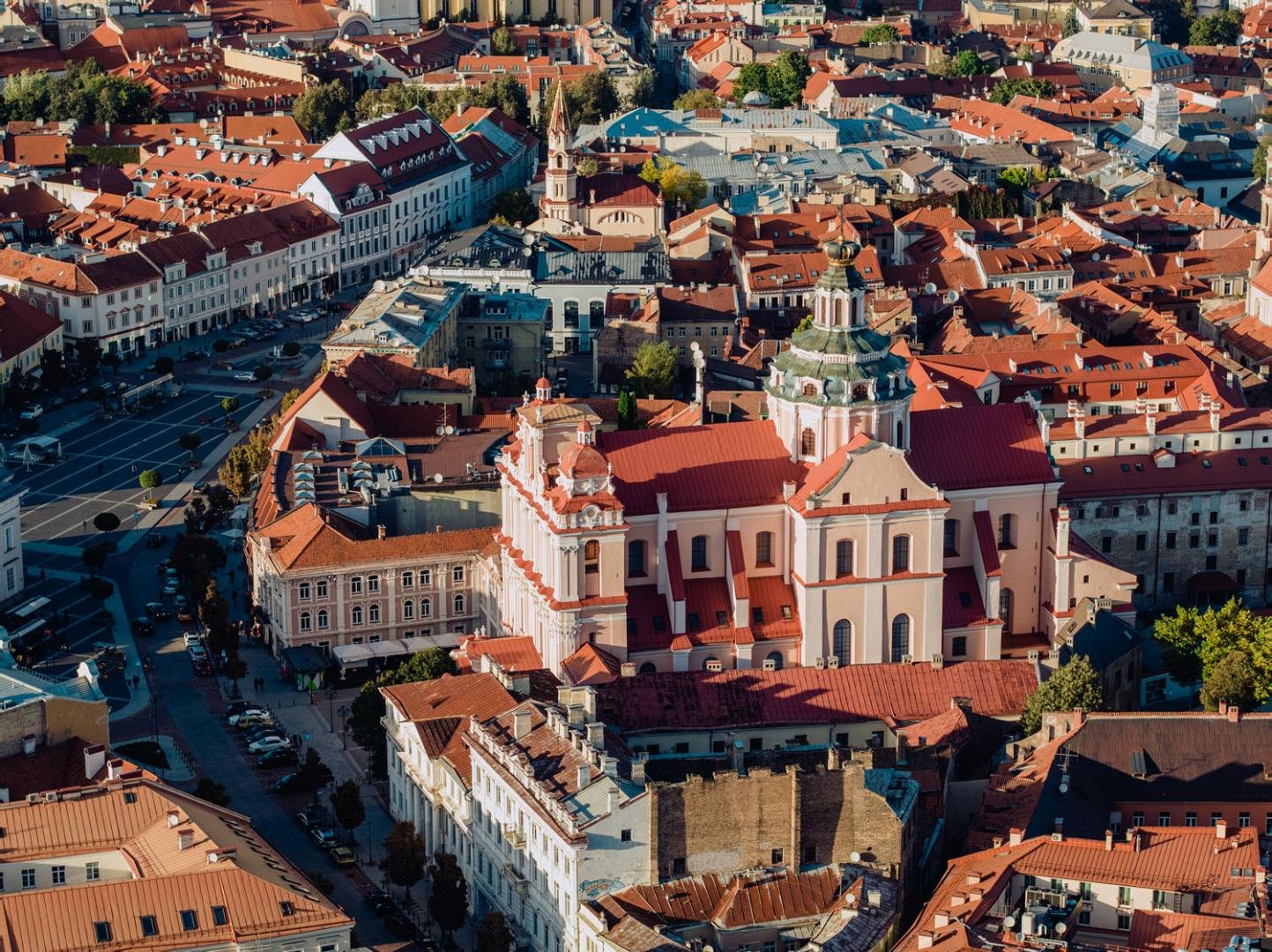
Lithuania, officially the Republic of Lithuania, is a country in the Baltic region of Europe. It is one of three Baltic states and lies on the eastern shore of the Baltic Sea, bordered by Latvia to the north, Belarus to the east and south, Poland to the south, and the Russian semi-exclave of Kaliningrad Oblast to the southwest, with a maritime border with Sweden to the west. Lithuania covers an area of 65,300 km2 (25,200 sq mi), and has a population of 2.9 million. Its capital and largest city is Vilnius; other major cities include Kaunas, Klaipėda, Šiauliai and Panevėžys. Lithuanians are the titular nation, belong to the ethnolinguistic group of Balts, and speak Lithuanian.
- Population: 2,800,000+
- Area: 65,300 km²
- Coordinates: Latitude: 54.683334350586, Longitude: 25.316667556763
- Timezone: Timezone info not available
- Current Local Time: ailab
Latest Lithuania News
15min.lt RSS - suprasti akimirksniu | RSS
Rusijos derybininkas giria Donaldo Trumpo raginimą dėl naujo Ukrainos prezidento
Rusijos prezidento Vladimiro Putino vyriausiasis derybininkas ekonomikos klausimais šeštadienį pagyrė Donaldo Trumpo (Donaldo Trampo) raginimą dėl naujo Ukrainos prezidento, JAV lyderio pastabas pavadinęs „ikoniškomis ir istorinėmis“.
15min.lt RSS - suprasti akimirksniu | RSS
Atsisakė visko, ką sukūrė: sėkmingą verslą įsukusi Lina pasuko ten, kur mato prasmę
Verslą iki šiol plėtojusi 45-erių metų kaunietė Lina Vyšniauskienė nusprendė atsisakyti visko, ką sukūrė – vėl pasuko į mokslus, o tą daryti brandesniame amžiuje, pripažinkime, nėra lengva. Negana to, studente ji tapo tuo pat metu, kaip ir sūnus, ir dar tame pačiame universitete. „Gal kam įkvėpimas būsiu, kad nesvarbu, kiek tau metų, galima studijuoti – ir dar dieniniame! Ir galima būti kartu su sūnumi studentais tame pačiame universitete“, – šyptelėjo ryžtingoji 15min pašnekovė.
BBC News
Russian glide bomb attack on Zaporizhzhia kills at least 15 people
Volodymyr Zelensky says the attack, which left children dead, was Russia expressing its "thanks" for a US diesel deal.
BBC News
Trump announces deal for Russian diesel as Zelensky calls it a gift to Putin
Ukraine's president sharply criticised the move, calling it an "investment in war that must be ended, not prolonged".
BBC News
Trump announces deal for Russian diesel as Zelensky calls it a gift to Putin
Ukraine's president sharply criticised the move, calling it an "investment in war that must be ended, not prolonged".
BBC News
Analysis: Trump's shock Russia deal highlights mounting pressure to curb fuel prices
The US president hopes to ease his party's pain before next month's midterm elections, writes the BBC's North America correspondent.
POLITICO
Germany warns EU that €159B budget cuts are not enough
BRUSSELS — Germany and its allies rebuffed Ireland’s plan to downsize the bloc’s next seven-year budget, arguing that the proposed cuts are not enough. On Saturday, the Irish presidency of the Council of the EU, which is steering the talks, proposed cutting around 8% from the bloc’s total budget from 2028 to 2034 in a bid to assuage a German-led camp demanding reductions of several hundred billions euros. But Dublin’s hopes of facilitating a deal were immediately dashed by German Chancellor Friedrich Merz, one the key players in the negotiations as his country contributes to approximately one-quarter of the bloc’s common budget. “We are still a long way from an agreement. The amount of the new proposal is not a basis for an agreement. The EU budget must be affordable for those who bear the brunt of the financing,” Merz wrote in a statement on Saturday. Germany leads a group of six “frugal” countries — Sweden, Denmark, the Netherlands, Finland and Austria — which contribute 40% of the Union’s common budget. Most frugal countries criticized Ireland’s proposed €159 billion in cuts in current prices from the Commission’s nearly €2 trillion proposal, saying they were insufficient. Sweden’s Europe minister Jessica Rosencrantz described the negotiating document, or negobox, on X as a “wildly unaffordable increase,” as the overall amount would still be higher than the current budget. Austrian Europe Minister Claudia Bauer echoed that criticism, saying that the new budget remained “miles away from an Austrian yes.” Tensions will come to a head during a summit of EU leaders next Thursday and Friday, where they will discuss the negobox. EU governments are racing to reach a budget deal among themselves by the end of the year — before elections in France, Italy and Poland in 2027 threaten to derail negotiations. But Dutch Finance Minister Eelco Heinen warned on Saturday that “at this rate, there will be no deal by the end of the year.” Ireland’s Minister of State for European Affairs Thomas Byrne, who leads the negotiations, dismissed criticism and described the proposal as a balanced compromise. “The negotiating box acts to bridge the many differences between the Member states,” Byrne told reporters on Saturday. Divided Union The EU is split between frugal countries pushing for cuts across the board and a rival camp of southern and eastern states, the Friends of Cohesion, opposing reductions to farmers’ subsidies and regional payouts known as cohesion policy. These areas account for almost half of the total budget and are politically sensitive because of pressure from farmers’ lobbies and regions. In a concession to the 17 Friends of Cohesion, Ireland left the agriculture and regional budgets untouched and focused cuts on other priorities such as competitiveness, defense and development aid. “There was a strong support for heading one [agriculture and cohesion] from almost all of the member states, including some of the countries who would be considered to be net contributors” to the budget, Byrne told reporters. Reactions to the negobox from the Friends of Cohesion were more conciliatory than those of their frugal peers. “It’s an excellent starting point to have recovered the money for the CAP [Common Agricultural Policy], but we’re still not satisfied,” said Italy’s Agriculture Minister Francesco Lollobrigida. Poland’s Europe minister Ignacy Niemczycki welcomed the fact that his country “continues to receive the largest allocation,” but noted that the “change in the overall size of the budget does not match the EU’s ambitions.” The frugals were also are disappointed that the cuts disproportionately target innovative policies such as defense and competitiveness, which they favor. “They’re cutting the future to protect the past,” said one EU diplomat from the frugal camp.
POLITICO
Strikes killing 17 are Russia’s ‘thanks’ for US diesel sanctions lift, Zelenskyy says
A Russian attack that killed at least 17 people including three children in Ukraine are Moscow’s “thanks for the lifting on sanctions on diesel exports,” Ukrainian President Volodymyr Zelenskyy said Saturday. A series of strikes on the south-eastern city of Zaporizhzhia also injured at least 18 people, including three children, Ukraine’s state emergency services said on Saturday afternoon. “People continue to be searched for under the rubble of destroyed houses. Rescue operations continue,” said Mykhailo Semikin, acting head of Zaporizhzhia regional military administration in a Telegram post. “Today, Russia expressed its thanks for the lifting of sanctions on diesel exports by dropping five glide bombs on residential buildings in Zaporizhzhia,” Zelenskyy said on X. The strikes took place just one day after U.S. President Donald Trump announced he would temporarily lift sanctions on Russian diesel in a bid to bring soaring prices down. Ukrainian officials were meeting on the same day with European and U.S. officials in Miami in a fresh diplomatic push to end the conflict between Russia and Ukraine. Zelenskyy criticized the deal on Friday and accused Trump of using the peace talks as a “smokescreen” while pursuing a deal with the Kremlin. Even though the talks were supposed to last two days, the Ukrainian team decided to return home earlier then planned “because they managed to talk everything through earlier,” a senior official familiar with the matter told POLITICO. Ukraine will continue to bomb Russian oil refineries despite US-Russia deals, the official added. The Ukrainian armed forces said Saturday they struck a major oil facility in Russia’s Samara region overnight. Zelenskyy is currently busy coordinating with Europeans and preparing several high-level meetings, the official said. He spoke on Saturday with leaders of France, Norway and Finland. “Russian strikes killed over 80 Ukrainian civilians in two days. Moreover, it has stepped up its hybrid attacks against Europe, both EU Member States and NATO Allies,” Kaja Kallas, the EU’s foreign policy chief, said Saturday. “Suspending sanctions on Russian diesel provides Moscow with more revenues to wage war.” “On Monday, EU Foreign Ministers intend to approve the biggest set of sanctions listings targeting Russia’s war machine since the start of the war,” Kallas added. This article was updated.
Al Jazeera – Breaking News, World News and Video from Al Jazeera
Photos: Thousands march across Europe to demand end to Israel’s war on Gaza
Demonstrations in London, Berlin, and Rome denounce ongoing Israeli attacks on Gaza 'ceasefire' anniversary.
Al Jazeera – Breaking News, World News and Video from Al Jazeera
Attack on airport in Saudi capital, Riyadh, leaves several injured
Operations suspended at King Khalid International Airport after another attack this week, Civil Aviation Authority says.
Europe
US warns Kyiv that strikes on Russia jeopardise intelligence-sharing
Trump suggests Volodymyr Zelenskyy should be replaced after Ukraine’s leader criticised diesel deal with Moscow
Europe
UK government faces new legal challenge after banning Northern Ireland parade
UK Secretary of State Chris Bryant blocked march through Catholic area after two weeks of escalating tension
France 24 - International breaking news, top stories and headlines
Riyadh airport suspends operations after attack leaves multiple people wounded
Saudi authorities on Saturday said that they had suspended operations at Riyadh's King Khalid International Airport after a new attack there left multiple people wounded. An attack on the airport by the Houthis on Thursday killed three people and damaged a plane, though the Iran-backed group did not announce any new attacks on Saturday.
France 24 - International breaking news, top stories and headlines
Convicted murderer Christa Pike leaves hospital, returns to prison after botched execution
Christa Pike's lawyers on Saturday said that the 50-year-old convicted murderer has been discharged from the hospital and returned to prison. Pike was transported to the hospital in critical condition on September 30 after she survived Tennessee's botched effort to execute her for murdering a classmate when she was a teenager.
Africanews RSS
Unreliable weather creating mental health issues for Kenyan farmers
A Kenyan clinical psychologist is urging policymakers to incorporate mental wellbeing into farmer support programmes.
Africanews RSS
Kenyan health ministry urges churches to raise awareness about Ebola
This follows the death in Nairobi on Monday of a Kenyan man who had travelled home from DR Congo through Uganda.