General Information
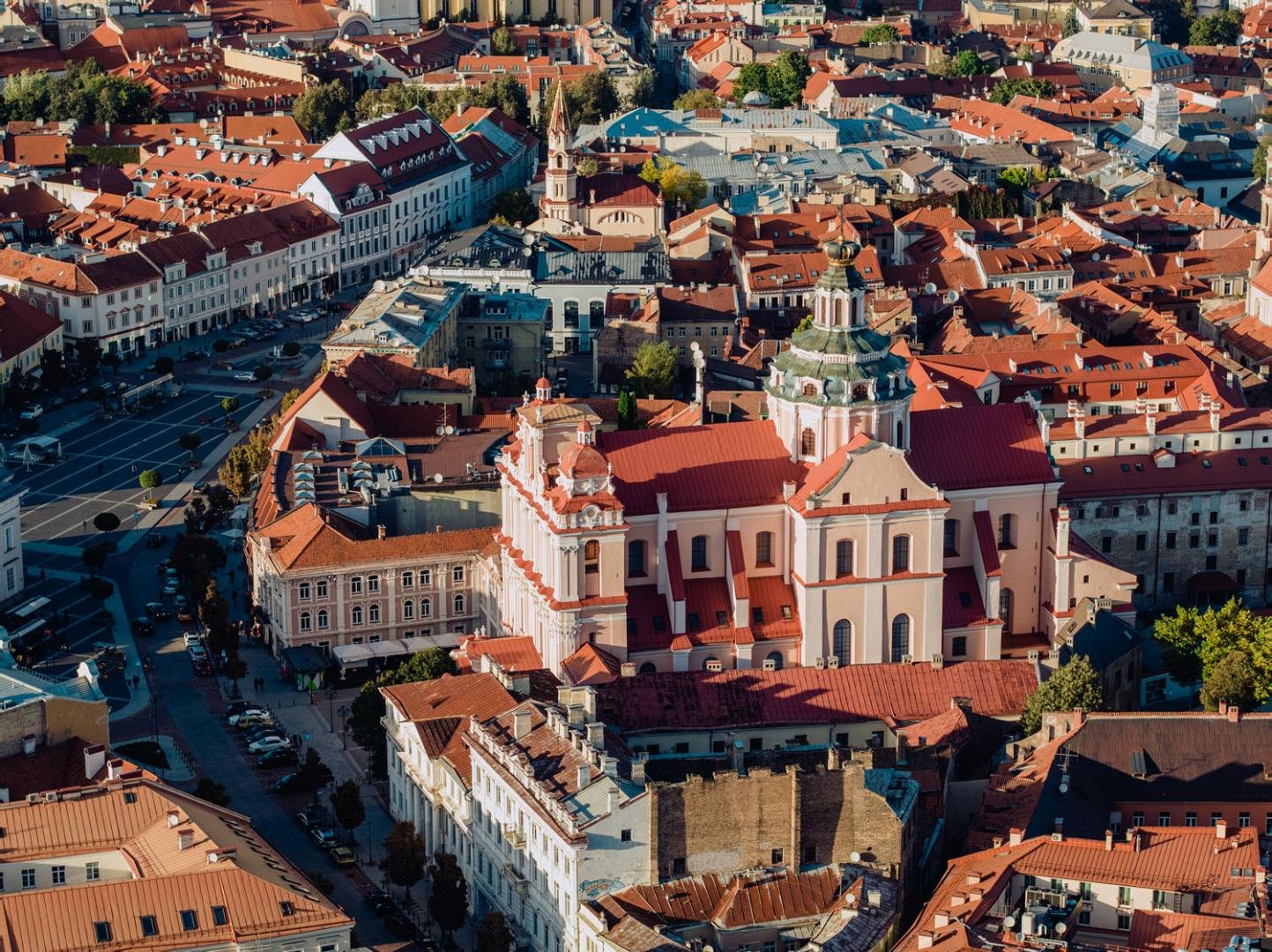
Lithuania, officially the Republic of Lithuania, is a country in the Baltic region of Europe. It is one of three Baltic states and lies on the eastern shore of the Baltic Sea, bordered by Latvia to the north, Belarus to the east and south, Poland to the south, and the Russian semi-exclave of Kaliningrad Oblast to the southwest, with a maritime border with Sweden to the west. Lithuania covers an area of 65,300 km2 (25,200 sq mi), and has a population of 2.9 million. Its capital and largest city is Vilnius; other major cities include Kaunas, Klaipėda, Šiauliai and Panevėžys. Lithuanians are the titular nation, belong to the ethnolinguistic group of Balts, and speak Lithuanian.
- Population: 2,800,000+
- Area: 65,300 km²
- Coordinates: Latitude: 54.683334350586, Longitude: 25.316667556763
- Timezone: Timezone info not available
- Current Local Time: ailab
Latest Lithuania News
15min.lt RSS - suprasti akimirksniu | RSS
Krikščioniškųjų gimdymo namų veikla bus tęsiama, tačiau gimdymai laikinai nepriimami
Kauno krikščioniškųjų gimdymo namų veikla bus tęsiama, tačiau dėl organizacinių darbų laikinai nebus priimami gimdymai.
15min.lt RSS - suprasti akimirksniu | RSS
Šv. Jeronimo premijos įteiktos vertėjoms Austėjai Merkevičiūtei ir Tiiu Sandrak
Minint Tarptautinę vertėjų dieną, trečiadienį Kultūros ministerijoje įteiktos vertėjų globėjo Šv. Jeronimo premijos šių metų laureatėms – Austėjai Merkevičiūtei už užsienio literatūros vertimus į lietuvių kalbą ir Tiiu Sandrak už lietuvių literatūros vertimus į užsienio kalbą.
BBC News
Russia launches largest attack on Ukraine energy infrastructure since spring
In total 11 regions of the country were attacked overnight, with residential buildings and railways also targeted, the Ukrainian PM says.
BBC News
Dozens hurt and hundreds arrested in wave of French school protests
Students have been protesting against conditions and resources in secondary schools since last week.
BBC News
Household energy bills forecast to see biggest rise in four years
A typical household faces an annual gas and electricity bill of £1,999 from January, based on a key forecast.
BBC News
Regulating AI 'not the right place to start' says Bailey
AI needs "rigorous" testing and safeguards to contain risk, Andrew Bailey says.
POLITICO
Macron and Sanchez say UK would be ‘welcome’ back in EU
LONDON — French President Emmanuel Macron and Spanish Prime Minister Pedro Sánchez have welcomed Andy Burnham’s plan to unpick Brexit. Speaking at a joint press conference on Wednesday, Macron said Britain returning to the EU would be “excellent news” while Sanchez said the U.K. would be welcomed “with open arms.” “This is very good news, both for his country and for Europeans,” Macron told reporters of the U.K. prime minister’s policy shift. “Welcome back.” Rejoining would be “a wise decision” and Burnham was “right to show such boldness,” Macron added. Speaking at the same press conference, Sanchez said: “Spain would welcome Britain’s return with open arms.” Burnham told Labour’s conference in Liverpool yesterday that Brexit had done more “harm than good” and that he would lay out the “different options” available to repair the damage at a forthcoming U.K.-EU summit expected in November. Speaking to broadcasters the morning after the speech, the PM confirmed the options could include rejoining the single market, the customs union, or even going “all the way” and rejoining the EU entirely. But the U.K. prime minister’s announcement was met with a more muted response from Brussels itself. A European Commission spokesperson said: “The U.K. is a close and valued partner of the European Union. It is for the U.K. Government to set out how it wishes to develop its relationship with the EU going forward. We remain open to engaging on the options it may put forward.” ‘We’ll wait for concrete proposals’ EU officials and diplomats, however, told POLITICO that behind the scenes the speech had been received positively in the European capital. “The mood is positive and commitment to have a good summit is definitely there,” said one EU official, who like others in this article was granted anonymity to speak candidly. “There is a lot of work ongoing to prepare for it.” Diplomats say that reaction among other EU member countries has also so far been broadly positive — if somewhat wary. One EU diplomat wondered aloud whether Burnham’s grand about-face would undermine the rationale for the upcoming U.K.-EU summit — which is yet to get a date but which was meant to conclude talks on a number of side-deals begun by Keir Starmer. “Why bother with difficult negotiations on SPS, emission trading and youth mobility if the U.K. wants a completely new deal?” they said. A second EU diplomat said the speech had been positively received, but added: “The U.K. will have to decide for itself what it wants. We’ll wait for concrete proposals from London.” A third noted: “We will see what he says. It will most likely take longer than November [to discuss], probably some time next year.” Sandro Gozi, the MEP who chairs the European Parliament’s parliament’s delegation to U.K., said that Burnham’s “call for a new course deserves a serious European response.” “Let’s turn that opening into concrete choices for a closer EU-U.K. partnership to give citizens and businesses on both sides of the channel a more prosperous, secure future,” he said.
POLITICO
Europe’s energy security has a Black Sea opportunity
Last Friday, 25 September, a vessel carrying 90,000 tonnes of Libyan El Sharara crude oil arrived at the port of Kulevi on the Black Sea coast in Georgia. It was the second Libyan delivery for the Kulevi Oil Refinery in less than a month, following the first cargo in August. Black Sea Petroleum (BSP), a privately owned company based in Georgia, owns and operates the Kulevi Oil Refinery. Operations began in October 2025, and today the refinery processes exclusively non-Russian crude oil. The Libyan deliveries form part of a long-term supply agreement. BSP’s existing production already offers a basis for supplying European markets with straight-run products, while EURO 5 fuel production is planned by 2029. Kriti Legend at Kulevi with BSP’s first shipment of Libyan crude oil, 30 August 2026. / via Black Sea Petroleum Europe’s need for diverse fuel supplies Europe continues to import fuels used in transport and industry. According to Eurostat, EU net imports in 2024 amounted to 15.7 million tonnes of oil equivalent for gasoil and diesel and 11 million for jet fuel. Both are included in the Kulevi Oil Refinery’s expansion plans. For Kulevi, the opportunity is to supply EU markets alongside Georgia, Armenia and Azerbaijan, drawing on non-Russian crude and the Black Sea’s shipping connections. Following the Oil Coordination Group meeting on September 8, 2026, the European Commission reported that higher EU refinery production and alternative international supplies were helping meet demand for diesel and jet fuel. Stocks remained sufficient, but developments in the Middle East and seasonal demand could tighten markets in the weeks and months ahead. Additional refining capacity connected to maritime trade could give Europe more sources of these fuels. For Kulevi, the opportunity is to supply EU markets alongside Georgia, Armenia and Azerbaijan, drawing on non-Russian crude and the Black Sea’s shipping connections. This would add another route through which international crude supplies can reach Europe as refined products. An operating refinery connected to the sea Four pipelines run for three kilometres between the Kulevi Oil Refinery and the nearby port and terminal. They carry crude oil, naphtha, gasoil and fuel oil. The port and terminal are separate facilities owned and operated by SOCAR. Pipelines connecting the Kulevi Oil Refinery with the nearby SOCAR-owned port and terminal. / via Black Sea Petroleum Crude arriving by sea or rail can reach the refinery through the terminal. Refined products can move in the other direction for shipment. The two Libyan cargoes show this infrastructure in use, bringing North African crude to the Black Sea for processing. Black Sea Petroleum has invested €200 million in the Kulevi Oil Refinery to date. A further €650 million is planned by 2029 to expand refining capacity and introduce new fuel production units. Supply contracts, certificates of origin and shipping records document the crude’s origin and its movement from the supplier to the refinery in Georgia. The pipeline connection allows the refinery to use the terminal for both incoming crude and outgoing products. Expansion can therefore build on an established route to international markets. Greater refining capacity would increase the volumes handled through that route, while new production units would broaden the types of fuel available. Investment already under way Black Sea Petroleum has invested €200 million in the Kulevi Oil Refinery to date. A further €650 million is planned by 2029 to expand refining capacity and introduce new fuel production units. Processing units and storage tanks at the Kulevi Oil Refinery. / via Black Sea Petroleum The company plans to raise annual refining capacity from 1.2–1.5 million tonnes to 4.5–5 million tonnes by 2028. Plans also include bringing EURO 5 fuel production units into operation by 2029. The planned product range includes petrol, diesel, jet fuel, liquefied petroleum gas, marine fuel and bitumen. These products would serve road transport, aviation, shipping and construction. Diesel and jet fuel would also place the expanded refinery in markets where the EU is a net importer. The investment programme is intended to support those exports while also meeting demand in neighbouring countries. Honeywell refining technology and licensed processes will support the planned expansion, alongside automation and modular processing units. Engineering and construction for the next stages have continued since the first phase opened in October 2025. BSP has completed 40,000 cubic metres of new storage capacity, with another 40,000 cubic metres nearing completion. This storage will support larger volumes of crude and products as production grows. Building lasting European relationships Led by co-founder and chief executive David Potskhveria, Black Sea Petroleum is establishing a Belgian company and plans to open its Brussels office in mid-October. The office will give EU institutions and European business partners a permanent point of contact for discussions about the refinery and its investment plans. BSP’s European Advisory Council and strategic advisers bring experience in European and international affairs to its work with EU institutions, national authorities and businesses across Member States. They support direct relationships between the company’s team in Georgia and its European counterparts. BSP welcomes interested partners to visit the Kulevi Oil Refinery, see production first-hand and meet the people responsible for its operations and development. Last week’s second Libyan delivery provides a concrete starting point for those conversations. The refinery is operating, non-Russian supplies are arriving and investment is continuing. Its development could give Europe an additional source of fuels through an existing Black Sea route, with a company seeking lasting European partnerships. Video about BSP and the Kulevi Oil Refinery For further informationbrussels@blackseapetroleum.eu
Al Jazeera – Breaking News, World News and Video from Al Jazeera
Palestinian archaeologists race against time to save Gaza’s heritage
A Palestinian team rescued Gaza's artefacts. The question now is where to store them.
Al Jazeera – Breaking News, World News and Video from Al Jazeera
Why Israel is interfering in Palestinian education
The occupation authorities are trying to censor Palestinian school curricula because they teach national consciousness.
Europe
Netherlands retreats from taxing paper profits on investments
Rob Jetten’s government responds to investor backlash with overhaul aimed at bolstering investment climate
Europe
Inflation accelerates in Eurozone’s biggest economies
Faster-than-expected consumer price growth could increase pressure on the ECB to raise rates
France 24 - International breaking news, top stories and headlines
What if art could help you live longer?
In this episode of Entre Nous, Delano D'Souza speaks to Daisy Fancourt, professor at University College London and a leading researcher on how the arts affects our brains and bodies. In her book "Art Cure" she draws on scientific evidence to show how the arts can transform our health and what her research suggests we should be doing to optimise the benefits.
France 24 - International breaking news, top stories and headlines
Ex-TV anchor crowned as king in Uganda after succession fight
A former television news anchor was crowned king of Uganda's Tooro Kingdom on Tuesday, becoming the 13th monarch of the Batooro people in a ritual-laden coronation that ended a succession dispute. Edward Rukidi Kijanangoma succeeded King Oyo Nyimba Kabamba Iguru Rukidi IV, whose death last month from cancer at age 34 triggered a feud, with his mother saying a previously undisclosed son was entitled to the throne.
Africanews RSS
São Tomé and Príncipe's main opposition party wins most seats in polls
The Liberation Movement of São Tomé and Príncipe failed however to win an outright majority, setting the stage for talks on a coalition government.
Africanews RSS
Rescuers pull migrants from deadly shipwreck off Tunisian Coast
At least two people, one of them a child, died and six went missing after a dramatic shipwreck off the Tunisian coast, near the Gulf of Gabes, according to the European non-profit humanitarian organisation Sea-Watch on Tuesday