lithuaniainfo Landing Page

lithuaniainfo News Guide

Get updated about Lithuania, and more Get updated about Lithuanian Business and Lithuanian News
lithuaniainfo Service

Lithuania Lithuanian Platform

This website uses cookies to ensure you get the best experience on our website. By clicking "Accept", you agree to our use of cookies. Learn more

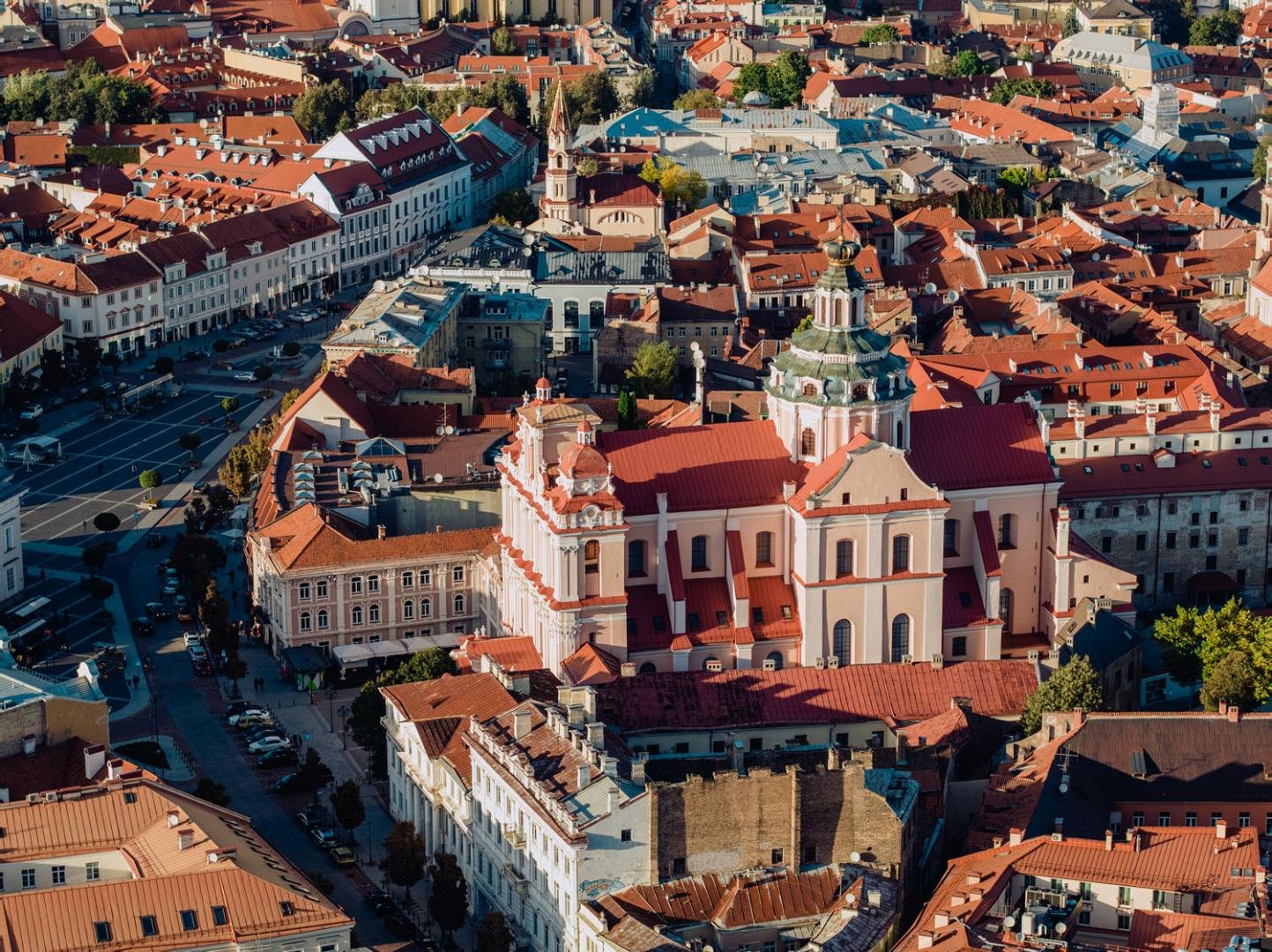
Vilnius Lithuania city skyline and Old Town
Lithuania Country Information

Lithuania

Lithuania

General Information

Lithuania, officially the Republic of Lithuania, is a country in the Baltic region of Europe. It is one of three Baltic states and lies on the eastern shore of the Baltic Sea, bordered by Latvia to the north, Belarus to the east and south, Poland to the south, and the Russian semi-exclave of Kaliningrad Oblast to the southwest, with a maritime border with Sweden to the west. Lithuania covers an area of 65,300 km2 (25,200 sq mi), and has a population of 2.9 million. Its capital and largest city is Vilnius; other major cities include Kaunas, Klaipėda, Šiauliai and Panevėžys. Lithuanians are the titular nation, belong to the ethnolinguistic group of Balts, and speak Lithuanian.

Living Expenses

Salaries

Top Attractions

Major National Events

Lithuania Travel Videos – Vilnius, Kaunas, Trakai, Klaipėda, Nida, Druskininkai & More

🇱🇹 Lithuania Travel Videos

Vilnius, Kaunas, Trakai, Klaipėda, the Curonian Spit, Nida, Druskininkai, Šiauliai, and real life across Lithuania in 4K

Explore Lithuania Through Video

Real YouTube travel footage with working watch links for every video.

Vilnius

Old Town, Cathedral Square, river walks, and capital-city atmosphere.

Kaunas & Trakai

Historic city streets, castles, lakes, and central Lithuania travel scenes.

Klaipėda & Coast

Port-city walks, seaside views, Melnragė Beach, and Baltic charm.

Nida, Druskininkai & Šiauliai

Curonian Spit scenery, spa-town calm, and the Hill of Crosses region.

Lithuania Travel Highlights

This Lithuania video page is built for visitors who want real places, real streets, and real travel footage. It focuses on the most searched destinations in Lithuania, including Vilnius, Kaunas, Trakai, Klaipėda, the Curonian Spit, Nida, Druskininkai, and Šiauliai.

1. Vilnius, Lithuania Walking Tour 4k - With Captions

A real walking tour through Vilnius showing Old Town streets, historic landmarks, and everyday life in Lithuania’s capital.

2. VILNIUS, Lithuania - Summer Tour - 4K HDR with captions

A summer Vilnius tour with city center views, scenic streets, and a bright travel atmosphere.

3. [4k] Walking in VILNIUS OLD TOWN , Lithuania

A detailed Old Town walk through Vilnius with medieval streets and a classic European feel.

4. VILNIUS, LITHUANIA Short 4K Walk in the Capital City | 60fps ...

A short but immersive 4K walk through Vilnius, filmed in smooth 60fps.

5. VILNIUS, Lithuania Walking Tour 2025 | 4K UHD | Captions ...

A 2025 Vilnius walking tour with captions, city streets, and river-side views.

6. Vilnius, Lithuania Walking Tour - 4K Downtown tour|Jun 2025

A downtown Vilnius walk showing central streets and the city’s modern travel atmosphere.

7. Walking in VILNIUS / Lithuania - 4K 60fps (UHD)

A clean 4K 60fps walk through Vilnius with city sounds and strong street-level detail.

8. Vilnius, Lithuania Walking Tour in 4K 60fps | Cathedral Square ...

A Vilnius tour centered on Cathedral Square and the Old Town area.

9. Vilnius Lithuania 4k walking video @TravelwithHugoF

A scenic walking video through Vilnius Old Town with historic streets and a relaxed travel feel.

10. VILNIUS, Lithuania - Old Town - 4K HDR walking tour with captions

A highly detailed Vilnius Old Town walk with historic architecture and captions.

11. Kaunas, Lithuania Walking Tour 4K | Explore the Historic Old ...

A real walking tour through Kaunas Old Town showing historic streets and central landmarks.

12. Kaunas Walking Tour Lithuania in 4K Video | Explore Old ...

A 4K Kaunas walk with Old Town views, streets, and a classic Lithuanian city atmosphere.

13. Kaunas Lithuania / Old Town / Walk Tour 2023 / 4K Resolution

A detailed Kaunas Old Town walk filmed in 4K resolution.

14. KAUNAS, LITHUANIA | WALKING TOUR 4K 🇱🇹

A city walk through Kaunas with a broad look at downtown streets and urban life.

15. Kaunas Daytime walk / Lithuania / August 2024 / 4K HDR

A daytime Kaunas walk with bright streets, city details, and 4K HDR footage.

16. Kaunas, Lithuania. An evening walk in the city center. 4K

An evening walk in Kaunas city center with warm light and calm urban scenery.

17. Walking in KAUNAS / Lithuania - City Center in Winter - 4K ...

A winter Kaunas walk showing the city center in cold-weather conditions.

18. Kaunas Walking Tour 2024 | Historic City Center in 4K

A travel walk through Kaunas city center with a mix of historic and modern streets.

19. Kaunas Walking Tour Lithuania in 4K Video. Explore from the ...

A broad Kaunas walking tour covering city streets and a well-known travel route.

20. Cinematic Walk Tour - Kaunas - Lithuania - 4K Walk Around ...

A cinematic Kaunas tour with a smooth walk-around style.

21. Explore Trakai , Lithuania | 4K Walking Tour of a Stunning ...

A peaceful walking tour through Trakai with lakeside scenery and the famous island castle.

22. Trakai Lithuania 4K Walking Tour | Castles, Lakes & Karaim ...

A scenic Trakai tour showing castles, lakes, and the town’s unique Karaim heritage.

23. Walking Around Trakai, Lithuania | Stunning Island Castle ...

A relaxing walk around Trakai with the island castle and clear lake views.

24. Trakai Castle from drone | 4k video | Lithuania, Trakai Castle ...

Aerial footage over Trakai Castle showing one of Lithuania’s most famous landmarks.

25. Lithuania, TRAKAI Walking near Historical Castle 2024 [4K]

A walk near Trakai Castle with scenic paths and historic atmosphere.

26. Trakai Island Castle | Lithuania | Walking Tour 4K

A detailed walking tour of Trakai Island Castle and its surrounding lake landscape.

27. TRAKAI LITHUANIA 4K

A simple 4K travel clip from Trakai and the island castle area.

28. Trakai, Lithuania | 4K

A clean 4K look at Trakai with castle and water views.

29. 4K Klaipėda's Old Town, Lithuania - Urban Walking Tour ...

A walking tour through Klaipėda Old Town showing the port city’s streets and city-center atmosphere.

30. Klaipeda walking tour @TravelwithHugoF #memel #lithuania ...

An immersive Klaipėda walking tour with the charm of Lithuania’s coastal city.

31. KLAIPEDA, Lithuania - Cloudy Summer Day - 4K HDR ...

A cloudy summer Klaipėda walk showing the port city’s relaxed vibe and waterfront character.

32. Charming Old Town of Klaipėda, Lithuania Walking Tour with ...

A charming Old Town walk in Klaipėda with city sounds and historic streets.

33. Lithuania 4K - Klaipeda Old Town.

A clean look at Klaipėda Old Town with a simple travel-video style.

34. Lithuania, Klaipėda walking in city centre , old town and city ...

A broad Klaipėda walk through the city center, old town, and park areas.

35. Melnrage Beach | Klaipėda, Lithuania | 4K Walking Tour

A seaside Klaipėda video focused on Melnragė Beach and the Baltic coast.

36. Klaipėda walking tour 4K | August 2024

A summer Klaipėda walking tour with port-city views and a relaxed pace.

37. Lithuania's most beautiful coast: Klaipeda and the magical ...

A scenic coastal video covering Klaipėda and the Curonian Spit.

38. Scenes from the Curonian Spit (Lithuania- 4K)

A scenic film from the Curonian Spit showing dunes, coast, and peaceful natural landscapes.

39. Curonian spit | Lithuania | Calm summer's afternoon drive | 4K 60 ...

A calm summer drive along the Curonian Spit with beautiful coastal scenery.

40. Exploring the Curonian Spit on Foot: Forests, dunes and ...

A walking exploration of the Curonian Spit’s forests, dunes, and UNESCO landscape.

41. Grey dunes, Curonian Spit. Episode III (4K) Lithuania ...

A 4K video focused on the Grey Dunes of the Curonian Spit.

42. [4K] Exploring Curonian Spit National Park on foot and on the ...

A walk and bike exploration of Curonian Spit National Park, a UNESCO World Heritage site.

43. NIDA - Kuršių Nerija - Kurische Nehrung - CURONIAN SPIT ...

A travel video from Nida on the Curonian Spit with dunes and coastal scenery.

44. Nida, Lithuania | Walking tour 4K

A relaxing walk through Nida showing the resort town and the path toward Parnidis Dune.

45. Walking Tour in Lithuania 4K - Nida Walk from Nida Center to ...

A Nida walking tour from the center toward the House of Thomas Mann.

46. Nida Lithuania 4K

A simple 4K look at Nida with the calm feel of the Curonian Spit.

47. Nida, Lithuania 4K - Family Vacation | 리투아니아 니다

A family vacation video from Nida with beach, town, and Curonian Spit views.

48. Walk on the Baltic Sean, the Beach of Nida, Lithuania

A beach walk in Nida showing the Baltic shore and dune-side scenery.

49. [4K] Lithuania Walk - Main Streets of Druskininkai, SPA ...

A walking tour of Druskininkai, Lithuania’s spa capital, with main streets and resort atmosphere.

50. Druskininkai center walking tour. 4K/60.

A 4K/60 walking tour through Druskininkai city center.

51. Walk through the center of Druskininkai, Lithuania 2023, 4K ...

A 2023 walk through the Druskininkai center in crisp 4K.

52. Main Streets of Druskininkai with Grand SPA Lietuva

A look at the main streets of Druskininkai and the Grand SPA Lietuva area.

53. Night Walking through Main Streets of Druskininkai, SPA Capital

A nighttime Druskininkai walk showing the spa-town atmosphere after dark.

54. Druskininkai, Lithuania (4K)

A 4K travel look at Druskininkai with relaxed resort-town scenes.

55. Druskininkai. Lithuania. Part1

A first part of a Druskininkai walk with local city scenes.

56. LITHUANIA. DRUSKININKAI.

A simple walk through Druskininkai showing everyday life in the spa town.

57. Siauliai Evening walk / Lithuania / August 2024 / 4K HDR

An evening walk in Šiauliai with rainy, atmospheric city scenes.

58. Hill of Crosses 2025 | Šiauliai, Lithuania - 4K HDR

A 4K HDR visit to the Hill of Crosses near Šiauliai, one of Lithuania’s most iconic pilgrimage sites.

59. 【4K】 Lithuania Siauliai Walk - The Snowy Hill of Crosses in ...

A snowy Šiauliai walk centered on the Hill of Crosses and its dramatic winter scenery.

60. Walking in the streets of Siauliai on August 8,2021

A street walk through Šiauliai showing the city in real time.

61. Šiauliai travel guide | Lithuania

A travel guide to Šiauliai with city highlights and northern Lithuania context.

62. I crossed the streets of Šiauliai

A straightforward street walk through Šiauliai with a real local atmosphere.

63. A Spiritual Journey in Lithuania 🇱🇹 | 4K Walking Tour - 2024

A spiritual travel journey through Lithuania with a focus on the Hill of Crosses and related sights.

64. Lithuania 4K/4K HDR

A broad drone and travel collection covering multiple Lithuanian places.

65. Lithuania city tour | Tallinn, Tartu, Narva, Parnu | Drone 4k video ...

A mixed Baltic drone tour that includes Lithuania-style city travel footage and regional scenery.

66. Lithuania Tour - Train station announcement in the Lithuanian language

A rail/travel-style Lithuania clip with local transit atmosphere.

Lithuania News

Latest Lithuania News

15min.lt RSS - suprasti akimirksniu | RSS
Lenkijoje užfiksuota karščiausia birželio diena nuo matavimų pradžios
Lenkijoje užfiksuota karščiausia birželio diena nuo matavimų pradžios, tačiau sinoptikai įspėja, kad, Europą svilinant beprecedentei karščio bangai, laukiama dar aukštesnių temperatūrų, rašo portalas „TVP World“.
15min.lt RSS - suprasti akimirksniu | RSS
Izraelio kariuomenė pranešė apie kario žūtį per susirėmimus Pietų Libane
Izraelio kariuomenė pranešė, kad sekmadienį per susirėmimus Pietų Libane žuvo karys.
BBC News
Heatwave breaks records in Germany, Denmark and Czech Republic
An estimated 150 million people have been experiencing temperatures of over 35C across Europe.
BBC News
Christmas market attacker jailed for life for murdering six in Germany
A nine-year-old and five women were killed when Taleb Al-Abdulmohsen drove into the market in 2024.
BBC News
Trump threatens 100% tariff on European nations over tech tax
The US president says "Numerous European countries" have been discussing bringing in such a levy.
BBC News
Could you handle a 20-plus hour flight? This airline is banking on it
Some analysts say the first non-stop London to Sydney flight is a major milestone - but would you buy a ticket?
POLITICO
The Supreme Court is building its own massive police force
A series of slickly produced videos show agents clad in suits and sunglasses striding confidently in slow motion. They usher VIPs into armored SUVs, as specially trained dogs sniff out explosives and officers toting assault rifles keep watch. The scenes evoke Hollywood films about the Secret Service, but the real-life protectees are not the president or the first family: They’re the justices of the Supreme Court, and these videos are part of an aggressive recruitment pitch for officers to defend them. The staid Supreme Court now has sizzle reels and even a pithy tag line from a dulcet-toned announcer: “The highest court. A higher calling.” It’s often said that the Supreme Court has no army. Yet, with little fanfare, the size of the Supreme Court’s police force has begun mushrooming. For years, the force sat at fewer than 200 officers, but now officials are aiming to more than double the ranks of the agents and officers who protect the justices and the Supreme Court’s building. The push for a rapid security buildout stems from the substantial threats to the justices at a moment of growing political violence in the U.S. and the sense that the system has just not been up to the task of keeping them safe. That’s a belief that appears to be shared by at least some of the justices themselves. “The justices are averse to the intrusion into their personal lives that comes with increased security, but they are resigned to the need for it both personally and for the court as an institution,” said one former court staffer, who was granted anonymity to speak candidly about the court’s security practices. A spokesperson for the Supreme Court declined to comment for this article. The Supreme Court has never been so central to the political system, nor so public in the way it exercises power — be it snarling the pre-election prosecution of Donald Trump, blocking the president’s tariffs or scaling back the Voting Rights Act. Yet even as the court boasts sweeping authority, it remains reflexively opaque to the public. The prospect that Americans grow restless at being ruled by nine robed lawyers they never see doing their jobs has the potential to fuel a crisis of legitimacy. The Supreme Court cloaks its deliberations in secrecy and still banishes cameras from its ornate courtroom. Court officials are loath to discuss the security measures being undertaken to protect the justices. But the portrait of an institution straining to transform itself and its security apparatus comes into focus through an in-depth review of budget documents and videos posted on an officer-hiring website, as well as interviews with court insiders and little-noticed public comments by the justices. With heightened security has come a slew of financial and logistical challenges for the high court, as well as a significant personal and professional impact on the justices themselves. Some of the justices have complained that the growing security envelope has complicated their lives, limiting their ability to go places and changing the way they interact with the public. The Supreme Court has also become a lightning rod in recent years, fueling outcries over ethics controversies as well as a series of polarizing rulings that have reshaped American life. With more contentious debates over the court and more concern about security, the justices appear increasingly less likely to venture into what’s perceived as enemy territory — which only risks further cloistering them in an ideological cocoon. With the Supreme Court’s approval rating dropping as low as 39 percent last year and now appearing to stand at about 46 percent the demand for greater oversight and accountability seems to be spreading in Washington. Congress has granted recent requests for tens of millions of dollars in additional taxpayer funds for the justices’ security, but some lawmakers are calling for more transparency from the high court — including congressional testimony from the justices — about why its costs are spiking and how officials have decided what level of protection the justices require. “We provide money for the Supreme Court,” Rep. Rosa DeLauro, the top Democrat on the House Appropriations Committee, said in April. “They’ve never come up and tell us what they’re doing with the money that we appropriate.” Now, as the justices wind down their term and continue making decisions on some of the most consequential and controversial issues of our time, they remain deeply constrained by security details, armored vehicles and the kind of onerous protocols that mean they can’t even go to the grocery store by themselves. ‘Green around the gills’ Shortly after 1 a.m. on June 8, 2022, a Washington Flyer taxi pulled up on a dark, leafy street in Chevy Chase, Maryland, directly in front of the home of Justice Brett Kavanaugh. Due to protests that had broken out at conservative justices’ homes after POLITICO disclosed a draft Supreme Court opinion to overturn Roe v. Wade, two deputy U.S. Marshals were on duty outside Kavanaugh’s house. For the overnight shift, they were stationed in two white SUVs. The arrival of the taxi caught the attention of at least one of the marshals. Deputy Marshal Ashlee Curtis opened her door, briefly turning the interior lights on in her vehicle, before closing the door about 20 seconds later. The occupant of the taxi got out with a black rolling suitcase, stepped onto the sidewalk outside Kavanaugh’s home and quickly walked past Curtis’ SUV, before continuing down the sidewalk and around the corner, according to surveillance video. Curtis said in a court filing that she kept her eyes on the unexpected visitor until the person disappeared around the corner. The taxi lingered for a few minutes, then drove off and the monotony of late-night guard duty at Kavanaugh’s home returned. It was shattered about 35 minutes later as a local police radio in one of the SUVs crackled to life with a call for “a suicidal/homicidal” person on the street just behind Kavanaugh’s residence. Curtis said she and her partner left their SUVs and took up positions outside the justice’s house, while she called the Montgomery County police and learned that the radio call involved a person intending to kill the justice. Sophie Roske, who had called 911 and told the police about her plan to kill Kavanaugh and then die by suicide, was taken into custody by the local police without incident. The contents of Roske’s suitcase were chilling: a Glock 9mm semiautomatic pistol, 37 rounds of ammunition, pepper spray, tools, zipties, a black face mask, duct tape and 2 lock-picking sets. No one was hurt, but the incident and the stark criminal charge that would later be filed against Roske — attempted assassination of a Supreme Court justice — proved to be the driving force behind moves to implement tougher security around the justices. During a virtual recruiting event in April, a Supreme Court Police officer said the attempt on Kavanaugh’s life led directly to the ongoing surge in security. “They arrested someone, it was very national news, that had attempted to come up to Justice Kavanaugh’s home,” Sgt. Mark Hosier said. “This is right after the leak of the case came out. … It showed the need for a serious, growing residential security unit, which is still in the process. … And we are hiring for all these units right now, at the same time.” The episode also reinforced longstanding doubts about the role the Marshals Service has played in protecting the justices and hastened moves toward bringing more of their security under the high court’s direct control. Historically, the marshals have been tasked with protecting justices only on a part-time basis — typically when they traveled outside Washington. After the Dobbs leak in 2022, the marshals’ role expanded abruptly, because the court’s own police force simply lacked the personnel to provide round-the-clock role protection of the justices’ homes and families. The Supreme Court Police, which began as a guard force for the building, found itself straining to meet the security demands involved in the justices’ day-to-day lives, public appearances and travels across the country and the globe. Kavanaugh was upset about the close call at his home. He complained privately that deputy marshals with little experience were assigned to the guard duty, according to a person who regularly speaks with some of the justices who was granted anonymity to speak candidly. Public records bear out the validity of his complaint. Curtis, one of the two deputies on duty outside Kavanaugh’s home that night, filed a declaration in court indicating she’d been a marshal for less than five months at the time of the incident. She left her job in a Colorado sheriff’s office earlier that year and appears to have graduated from the Marshals’ basic training program just weeks before she was posted on the justice’s lawn. Curtis did not respond to a request for comment placed through a Marshals Service spokesperson, who added that the Marshals Service was unaware of Kavanaugh’s complaint or concerns. It’s unclear whether the other deputy marshal on duty that night was more or less experienced. Some law enforcement experts have said security personnel with more Secret Service-like training might have casually approached Roske following the suspicious, late-night arrival outside Kavanaugh’s house, rather than allowing the unexpected visitor to simply walk away unchallenged. “There was a passage of time there that probably didn’t need to happen,” said John Muffler, a former Marshals Service chief inspector. Muffler said the Marshals Service is sometimes strained when forced to quickly contribute large numbers of personnel to long-term judicial security assignments and that in an all-hands-on-deck moment, the agents being sent “may be green around the gills.” The Marshals Service recently transitioned out of its role in providing residential security for the justices, completing its transfer to Supreme Court Police just last month. Asked if that freed up personnel for other activities, the Marshals Service spokesperson called protecting the federal judicial process, including personnel and court buildings, “a core” duty, adding, “As our missions dictate, we ensure the right amount of deputies are in the right locations doing the missions that are required.” Still, the varied responsibilities of the Marshals Service, including arresting fugitives, protecting lower-court federal judges and safeguarding witnesses, have also led to divides in the workforce between those who specialize in one mission but are sometimes pulled into another. “Being on a protective mindset is a different skill set,” Muffler said. “The difference of somebody who’s wearing a suit and tie and an earpiece and looking sharp, and a guy that’s kicking a door in.” ‘Stalking the chief justice’ For most of the Supreme Court’s history, security seems to have been an afterthought and — to some justices — an annoyance. During the 19th century, the justices regularly “rode the circuit” they were assigned to, traveling from one city to the next under their jurisdiction to hear cases. They typically went unaccompanied and sometimes encountered angry crowds or litigants. In 1839, Justice John McKinley was hit in the face by a court crier while overseeing debt-collection trials in Mississippi. In more modern times, the justices have faced a flurry of incidents that fueled questions about the adequacy of their security arrangements. In 1982, a man shouting about pornography and busing rushed Justice Byron White and began pummeling him as he prepared to deliver a speech to a bar association meeting in Salt Lake City. The assailant was subdued by nearby lawyers, and White suffered only a minor bruise to his face. “I was about to turn around and deck the guy, but some people intervened,” White told one attorney after the attack. William Rehnquist, who joined the high court in 1972 and served as chief justice from 1986 until his death in 2005, had a fairly casual approach to his personal security despite facing “an increasing number of threats,” including “a woman that was stalking the chief justice,” according to Rehnquist’s top aide in the early 1990s, Robb Jones. Rehnquist’s personal routine galled the court’s security personnel, who feared it made him vulnerable. “The chief would take a walk in the morning, sometime shortly after he got to work, just for a brief 20-minute walk, the same route at the same time, right around the court, and it used to drive the protection, the police people nuts,” Jones said. “He refused to have anybody walk with him. … I was asked once to try to talk with him about it, and I got nowhere. He said, ‘If they’re going to get me, they’re going to get me.’” In 2012, Justice Stephen Breyer was robbed by a machete-wielding man while on vacation in the Caribbean. Authorities said the justice, who was not hurt, did not appear to have been targeted due to his position. A few months later, Breyer’s home in Georgetown was burglarized while he was away. Thieves made off with some silver candlesticks and place settings, but nothing related to the court was taken, a spokesperson said at the time. Another major impetus for more robust security came in 2016, when Justice Antonin Scalia died unexpectedly while visiting a hunting lodge and ranch in Texas. Officials said Scalia had “declined” protection from the Marshals Service during the trip, so there was no official security on site when Scalia did not come down for breakfast and was eventually found dead in his bed. It took marshals more than three hours to arrive at the remote West Texas ranch after Scalia’s body was discovered. The delay led to speculation and conspiracy theories about Scalia’s death, though Scalia’s official physician later told Texas authorities that the 79-year-old justice suffered from “many chronic medical conditions,” including diabetes, coronary artery disease and sleep apnea and had undergone several spinal surgeries. Scalia’s abrupt death and the revelation that he was unguarded at the time may have contributed to a quiet intervention by Congress about a decade ago: A former Supreme Court clerk said he was told by several justices that a bipartisan pair of House Judiciary Committee members, including California Republican Darrell Issa, visited Chief Justice John Roberts to warn that the protections for the justices were amateurish and potentially dangerous. Issa confirmed the exchange to POLITICO Magazine, but said the caution was delivered diplomatically. “We had concerns,” Issa said in a recent interview. “The Capitol Police have an umbrella that provides considerable security, but the marshals in travel and so on, it’s a very light [footprint.]” Others attributed the ramp-up in security to a series of reviews the court commissioned beginning in 2018 from a firm run by former Homeland Security Secretary and 3rd Circuit Judge Michael Chertoff. “That was a significant factor in driving increased security for the justices,” the former court staffer said. “They all felt like there needed to be enhanced security, but I think this kind of crystalized it for some of them.” Today, the court is particularly circumspect about the threats the justices receive. What it does disclose is that there are a lot of them. So many that the personnel assigned to assess them struggle to keep up: A budget request for the current fiscal year asked for two more officers and eight more analysts to handle the stream of threats. “New threat investigation officers will address case workloads that exceed sustainable levels for the existing staff,” the request said. Precisely what — or who — is fueling the surge in threats can’t be determined with complete certainty. There’s no doubt that publicity around the court’s 2022 abortion ruling triggered some threats, as well as security concerns driven by abortion-rights protests at conservative justices’ homes. Publicity about Roske’s assassination attempt also “led to other threats,” according to prosecutors. Last year, Kavanaugh “received a letter invoking Roske’s name and referencing a gunshot to the Associate Justice’s head [and] expressing that the Associate Justice should ‘Die,’” prosecutors wrote in their request that Roske get at least 30 years in prison. (Roske was ultimately sentenced to just over eight years, prompting some Republicans to call for the sentencing judge’s impeachment.) Heated political rhetoric toward the Supreme Court could also be fueling the elevated number of threats. Trump has verbally attacked the justices with unparalleled intensity and frequency. In February, when the justices issued a 6-3 ruling striking down the centerpiece of Trump’s signature tariff policy, he blasted the court’s three Democratic appointees as “a — frankly — disgrace to our nation.” And he faulted his two appointees who voted against the tariffs, Justices Neil Gorsuch and Amy Coney Barrett, for allegedly falling under the sway of foreign interests and acting as “fools and lapdogs for the RINOs and the radical left Democrats.” A few weeks after Trump unleashed his vitriol over the Supreme Court’s tariff decision, Roberts declared — without directly referencing the president — that such talk can fuel threats. “Personally directed hostility is dangerous and it’s got to stop,” the chief justice said. While Trump’s stream of invective toward the court seems unique, Republicans have noted intemperate comments from Democratic lawmakers. In 2020, Senate Minority Leader Chuck Schumer lashed out at specific justices as the court heard arguments on an abortion-related case. “I want to tell you, Gorsuch, I want to tell you, Kavanaugh: You have released the whirlwind, and you will pay the price,” Schumer said. “You won’t know what hit you if you go forward with these awful decisions.” Schumer’s remarks prompted an unusual public rebuke from Roberts, and Schumer apologized the following day. Trump hasn’t apologized for his attacks. And his ire seems likely to be directed at the high court again in the coming days if, as he seems to expect, he loses a high-profile challenge to his anti-birthright citizenship policy. ‘You have to come up’ Whatever may be spurring the threats, surging security spending is driving massive increases in the Supreme Court’s budget. In fiscal year 2022, the high court’s budget for salaries and expenses not related to upkeep of its building was $98.3 million. The Supreme Court’s request for fiscal 2027: $210.3 million, a 114 percent increase over five years. Supreme Court budget requests submitted to Congress indicate that the authorized size of the court’s sworn police force has more than doubled over the past few years and stands at more than 200, according to a recruiting video posted online late last year. The latest request seeks to add 54 more officers for the justices’ security details, 25 more to protect the court building and four administrative staff to deal with the department’s “significant growth.” Congress appears to have been very responsive to the high court’s security concerns. Days after protesters began demonstrating at justices’ homes in May 2022, the Senate unanimously passed a bill to expand the authority of the Supreme Court Police to protect the family members of justices. Shortly after the assassination attempt on Kavanaugh the following month, the House followed suit, approving the legislation, 396-27. More recently, a bill that ended a government shutdown last November contained a $28 million supplemental appropriation for Supreme Court security. The bill passed in April to re-open the Department of Homeland Security contained another $30 million in extra security funding for the high court. There are signs, however, that some in Congress are growing irritated that the high court continues to request additional security funds without appearing publicly before Congress to defend the spending. In April, a frustrated DeLauro said that “not that long ago” she spoke with Justice Elena Kagan about the court’s funding demands and emphasized that lawmakers needed more explanation from the court. “I said to her, ‘Happy to provide the security, but you have to come up. … We have no idea what you spend the money on,’” the veteran Connecticut Democrat said. According to DeLauro, Kagan said she’d spoken with Roberts and justices were prepared to testify on the court’s spending. The last congressional hearing at which one or more of the justices defended the court’s budget was more than seven years ago, when Kagan and Justice Samuel Alito jointly appeared before a House Appropriations subcommittee. (The last appearance by a justice before a Senate committee was in 2011.) That protracted drought appeared to be on the verge of breaking last month, when a yet-to-be-announced lineup of justices was set to discuss budget issues before a Senate panel. But the hearing was postponed for unclear reasons. No new date has been announced. So, what costs so much? The court takes pains to obscure the details of its security arrangements. Budget documents don’t reveal precisely how many agents are assigned to each justice’s detail, for instance. But it shouldn’t be surprising that the money adds up. Security experts say lawmakers and the public often underestimate the number of agents needed to run a robust, 24-hour protection detail for a prominent figure like a Supreme Court justice. “To do it for real, to do it appropriately, you’d have to be funded that way and resourced that way,” Muffler said. “Especially when you start to extrapolate beyond the justice. … Does the spouse get it? Does the kid get it?” Building that type of force is expensive, particularly with law enforcement agencies like the Park Police, Customs and Border Protection and the Secret Service competing for potential hires. The Supreme Court Police is now paying new recruits bonuses of up to $60,000 and matching salaries from other law enforcement agencies of as high as $142,000. The scramble to increase the court’s ranks of security personnel has also slightly pulled back the veil of secrecy, as officials try to convince potential recruits that the high court’s security team isn’t a sleepy guard force, but a full-fledged law enforcement agency with an alluring mission. “Every detail has an armored vehicle. All nine of them, every justice, rides in an armored vehicle,” Special Agent Rob Smith of the court’s Dignitary Protection Unit said at an online recruiting session last year . “They’re about 8- to 10,000 pounds, depending on which model you’re driving. They do drive a little bit differently than your normal Yukon or Suburban SUV, so it can be a little bit challenging.” The array of tasks Supreme Court Police are expected to perform has expanded. At one Federalist Society dinner that drew several justices to Union Station a few years ago, journalists escorted to a balcony high above the event were startled to see they were sharing it with a Supreme Court Police SWAT team camped out with assault rifles and scopes. The high court’s police force also now includes a Protective Intelligence Unit to analyze threats against the justices, a K-9 unit, a Nuclear, Biological and Chemical team and more. There are signs of strain from the sheer size of the high court’s security-focused hiring spree. The budget request for the coming fiscal year asks for five more administrative positions “to support significant growth within the Department.” And with physical space at the 91-year-old Supreme Court building essentially capped, court officials are looking for room elsewhere, asking Congress for $2 million to set up an “off-site… regional command post” to coordinate protection for the justices’ homes. Budget documents also describe the planned remote base as “a redundant police operation center to maintain all vital security programs in case of disruption.” At the court, evidence of the new focus on security is on display, but not obtrusive. There are more surveillance cameras and more doors secured with digital keypads, as opposed to just lock and key. Cybersecurity is also being stepped up. The high court’s current budget request seeks a dozen more staffers to “defend against quickly evolving cyber threats.” The fine print of another budget document revealed that the court undertook a “secure printing project” in 2023 or 2024. That was shortly after a Supreme Court investigation into the Dobbs leak reached an inconclusive result and urged adoption of “tracking mechanisms” for the court’s printers and copiers. The court has also been keen to wean itself off of Marshals Service protection. The marshals willingly took on the assignment of guarding justices’ homes, but it shifted them away from their other core task: arresting criminals. In 2024, the marshals scaled back a major operation pursuing fugitives, conducting it in 10 cities instead of the 20 targeted the previous year, in part because of the burdens of guarding the justices. “It does strain resources,” then-Marshals Service Director Ronald Davis told reporters. “Based on increasing demands on our deputies, with regards to not just the Supreme Court justices, but also the entire judiciary, we had to reduce the amount of cities.” Trump’s repeated attacks on judges have also fueled longstanding concerns that with judicial protection just one of several roles for the marshals, executive branch officials might not prioritize protection of judges facing Trump’s wrath. Last year, House and Senate Democrats introduced legislation that would move the Marshals Service out of the Justice Department and place it under the control of the judiciary. ‘Cloistered lives’ The era of Rehnquist’s daily, unguarded walks are long gone. The street behind the court where he used to wander is now routinely closed to traffic every time the justices sit for a public session, sometimes several times a week. Armored SUVs whisk the justices into an underground garage, while three pop-up barriers guarded by police block other vehicles from approaching. For those serving on the court — both longtime justices and the newer members — there is palpable regret about the security measures putting new limits on how they live their lives. “The security concerns now are much different from the way they were when I first became a circuit justice. That’s really one of the big changes since I’ve been on the court — that it’s become very, very dicey,” Justice Clarence Thomas said during an appearance at a judges’ conference in Florida last month. “Because of the security concerns, we’re not able to move around as much as I used to.” During the same exchange, Thomas cited threats as the reason he stopped an annual excursion taking law clerks to visit the Civil War battlefields in Gettysburg and the site of President Abraham Lincoln’s famous address. And he lamented that because of safety concerns he has stopped attending sporting events for some of his favorite teams, like the Nebraska Cornhuskers’ football, volleyball and softball squads. “Not recently. I tried. I tried. I apologize,” he said, sounding dejected. Justices rarely make mention in public of the impact the security precautions have on their families, but Barrett opened up a little during a conference in Colorado in 2024. “There was a time, at one point, where I was sent home from work with a bulletproof vest,” Barrett recalled. She said one of her sons, about 13, glimpsed the vest, prompting her to wonder if she should have hidden it. “I’m thinking, like, ‘Uh-oh, I didn’t think this through,’” she said. But her son was fascinated. “He said, ‘That is so cool!’” she recalled. “They’ve taken it in stride,” said Barrett, the only current member of the court with school-aged children. “They’ve gotten used to having to be picked up by the detail if I’m with them and we’re going to a soccer game and, as teenagers, they don’t always like that, but they’ve rolled with it and they’ve adjusted really well.” Barrett said the shift to being under 24/7 protection has been more of a challenge for her. “That actually has been one of the most difficult things for me to adjust to,” she said. “I went from one minute I could go anywhere, do anything, be anonymous if I wanted to, to in very short order being in the care of United States Marshals. … There are difficult things about it. I’d prefer to be able to go to the grocery store by myself, but I’ve gotten used to it.” There’s no doubt that the heightened security has changed and limited the way the justices interact with the public. In the immediate aftermath of the Dobbs leak, Alito, who authored the majority opinion, canceled a planned appearance at the 5th Circuit Judicial Conference in Tennessee. Instead, he sent a short video that appeared to have been recorded in front of a white sheet strung up to obscure his location. “Unfortunately, personal attendance became impractical, and I apologize for everyone for the change in plans,” Alito said, according to South Texas College of Law Professor Josh Blackman. At a similar conference in Philadelphia the following year, Alito skipped the portion of the event that was open to the press and lawyers and instead met the judges privately for dinner at a restaurant. Alito has spoken most starkly about the dangers facing the justices, particularly in the wake of the draft Dobbs leak. “The leak… made those of us who were thought to be in the majority and in support of overruling Roe… targets for assassination,” Alito said at a Heritage Foundation event a few months after the court handed down the Dobbs decision. “The conservative justices lead cloistered lives. It’s really a shame,” said one lawyer who has spoken recently with several justices and was granted anonymity to discuss sensitive security issues. “I assume liberal justices have security, but I don’t think they suffer the same threats in the sense that their lives are in danger.” Because the court says little about security matters, it’s difficult to know which justices receive the most threats, but publicly reported incidents provide some gauge. In 2024, an Alaska man, Panos Anastasiou, was arrested for sending almost 500 threats through the Supreme Court website to a total of six justices and two of their family members. In response to a defense claim that Anastasiou’s threats were protected by the First Amendment, prosecutors disclosed that his messages to the court included vowing to decapitate and lynch a justice as well as “putting a bullet in [the Justice’s] M****R F****G head.” Anastasiou also allegedly discussed plans to spray “their homes with bullets, have them beg for their lives before they are murdered, stalk and haunt the justices like prey, torture them while they begged for their lives before pulling out an AR-15 and unloading 100 rounds into them point blank, making them afraid to leave their homes, and assassinating two Justices in lieu of impeachment in order to change the ideological balance on the court.” Authorities didn’t name Anastasiou’s targets, but his threats appear to have been directed at the court’s conservative majority. Some overtly racist messages appear to have targeted Justice Thomas and his wife, Virginia Thomas. Earlier this year, Anastasiou pleaded guilty to a threat charge and a firearms charge in a deal with prosecutors. He’s set to be sentenced in August. Barrett also seems to continue to be a particular focus of threats and harassment. Last month, police received a phone call about gunshots heard at Barrett’s address in Fairfax County, Virginia. Photographer Andrew Leyden posted radio calls online indicating that police quickly determined that the call appeared to be a swatting incident — a false report intended to produce an armed police response. Among the liberal justices, at least one is particularly cautious about security. Asked in a radio interview last year about whether her chambers at the court have a view of the area where protesters often gather in front of the Supreme Court, Justice Ketanji Brown Jackson declined to answer even that seemingly innocuous question. “I think my security folks would like for me to not tell where I am in the building,” she told KCUR-FM in Kansas City, Missouri. When Jackson took part in a pair of speaking engagements last month at Southern Methodist University in Dallas, the crowd was required to pass through magnetometers and be wanded by security guards before entering. Supreme Court Police flanked the stage as she spoke. The next day, as Jackson prepared to catch an early flight at the Dallas-Fort Worth Airport, she was taken to a private room separate from other travelers. A POLITICO reporter who happened to be booked on the same flight looked on as a phalanx of plainclothes Supreme Court Police and airport police stood guard outside and then swept through the terminal with her towards the gate. But the best protection for Jackson may have been anonymity. The black surgical mask she donned for the journey allowed her to pass through DFW and Washington Reagan National Airport without being recognized by most of her fellow travelers. Despite the security concerns, many of the justices keep up a vigorous schedule of public appearances, particularly when promoting their books. Just in the last few months, according to a list of such events maintained by the advocacy organization Fix the Court, Roberts has spoken at Rice University in Texas, attended the black tie Alfalfa Club Dinner in Washington and accepted an award at the University of Virginia. Kavanaugh and Jackson took part jointly in a panel discussion at the Prettyman Courthouse in D.C. Barrett spoke to an event in Santa Fe, New Mexico, sponsored by St. John’s College and the University of New Mexico, and to a crowd at the George W. Bush Presidential Library in Dallas. Justice Sonia Sotomayor addressed law students at the University of Kansas and the University of Alabama. Video shows she also marched in a Princeton University alumni parade during her 50th college reunion, accompanied by her Supreme Court security detail. Kavanaugh also came out with a team of clerks for this year’s ACLI Capital Challenge Road Race. In 2024, three justices joined the event. Some justices have recently eased back into activities they gave up at the height of protests they faced in 2022. Thomas said recently that last year he was able to resume one of his favorite pastimes: traveling across the country in his recreational vehicle, despite the spate of bad publicity he received over having it financed by a wealthy friend who appears to have forgiven much of the loan. “We drove to Montgomery last summer,” Thomas said last month. “We have finally gotten back to that. … It’s a joy!” While it remains difficult for some members of the court to go out to dinner without the possibility of drawing unwanted attention or even protests, justices also continue to turn up at social events at private homes and for reunions of their law clerks. But the fact that those outings — often among ideological fellow travelers — are the ones most readily available to the justices may cause its own problems. “There is this pernicious underpinning of ‘I, as a justice, will only speak to my side,’” said Gabe Roth, executive director of Fix the Court, which advocates for greater transparency and broader ideological engagement by the justices. “I’m obviously incredibly concerned about the security,” Roth said, while adding that he worries that “the justices are just going speak to the friendly audiences more and more, and use security as an excuse.” Thomas, a frequent target of Fix the Court, expressed his own concern with this kind of ideological sorting when he canceled an in-person appearance at a February legal conference at American University due to unspecified security concerns. The move came after some liberal activists signaled plans to protest the event. “I think it says so much about where we are,” Thomas said in remarks he delivered remotely from Capitol Hill and obtained by The New York Times, “that we are sitting here and the people we are speaking to are sitting there, when in a civil society, we would all be sitting in the same room, at the same table, even as we disagree.” Whether American politics will ever grow less toxic or whether the high-alert security for the justices will ever ease is unclear, but the trajectory isn’t comforting. In 2010, the Supreme Court announced the public would no longer enter through the doors at the top of the iconic grand staircase that faces the Capitol, citing the recommendations of security studies. A court spokesperson said at the time that under a new arrangement, visitors would enter through side doors under those stairs and pass through “a secure, reinforced area to screen for weapons, explosives, and chemical and biological hazards.” Breyer, joined by Justice Ruth Bader Ginsburg, took the extraordinary step of issuing a public statement disagreeing with their colleagues’ decision. “While I recognize the reasons for this change, on balance I do not believe they justify it,” Breyer wrote in what amounted to a formal dissent arguing that the closure detracted from the symbolism of access to justice embodied in the building’s architecture. Speaking at a House hearing the following year, Breyer expressed hope that “things will calm down” and the decision would someday be reversed. Sixteen years later, the court’s grand front entrance remains closed.
POLITICO
About 1,000 deaths in France attributable to heat wave
PARIS — France has recorded 1,000 more deaths than usual this month — an increase that can be attributed to the record-breaking heat wave the country has gone through in recent days. “Since June 24, approximately 1,000 additional deaths (unconsolidated figures) have been recorded compared to the deaths recorded in previous months,” the French national health agency said in a statement on Sunday. “This increase has been more pronounced in regions under a red alert over the past few days,” the agency continued, referring to the highest alert level for heat waves. On Sunday, most of France was no longer on red alert, after more than a week of scorching heat, including several record-breaking days and nights. High temperatures are now moving eastward. The heat wave — the worst to ever to hit Western Europe — could not have occurred without humans heating the planet by burning fossil fuels, scientists said.  Spanish researchers are attributing more than 210 fatalities to the heat — a number expected to increase.  In France, several events have been canceled or postponed over the weekend, such as the Pride festival and the Solidays music festival, to avoid overloading hospitals which are already near their breaking point, especially in the Paris region. “The increases [in deaths] are seen across all age groups, underscoring the fact that the effects of heat waves can affect the entire population. Nevertheless, 85 percent of the deaths recorded involve people aged 65 and older,” the French health agency said, adding those were “preliminary data that underestimate the total number of deaths.” The heat wave has become a debate talking point for politicians, less than a year ahead of a high-stakes presidential election. Some schools have had to close and public transportation was affected, raising concerns about the French state’s lack of preparedness for extreme heat waves that are likely to become more intense, more frequent and longer, according to climate scientists.
Al Jazeera – Breaking News, World News and Video from Al Jazeera
Uganda’s military chief orders shutdown of two media outlets
The president's son said he did not believe in a free press as military personnel were deployed to the media offices.
Al Jazeera – Breaking News, World News and Video from Al Jazeera
‘US trying to find its way out of MoU with Iran’
Bahrain and Kuwait have condemned Iran’s retaliatory attacks after a second day of US strikes on Iran.
Europe
Why keeping Europe cool need not be a luxury
In the clean energy system the continent is trying to build, air conditioning basically comes for free
Europe
Spanish import hub urges EU to delay ban on Russian gas
LNG shipments to the bloc have risen in the wake of the Middle East war
France 24 - International breaking news, top stories and headlines
Albania's "Flamingo revolution": Trump-linked luxury resort plan triggers mass protests
Protests in Albania entered their fifth week on Saturday, with demonstrations that began in May over a planned luxury resort project linked to the Trump family. Since then, the movement has expanded into a broader criticism of Prime Minister Edi Rama and his government, with protesters raising wider concerns about governance and political accountability. Vladimir Karaj, a journalist and editor at the Balkan Investigative Reporting Network, joins us from Tirana for further insights.
France 24 - International breaking news, top stories and headlines
Serbia’s Vučić to resign, opening path to early elections amid political tensions
Serbia’s President Aleksandar Vučić has announced that he will resign within weeks, paving the way for early elections. There is speculation that the populist leader could attempt to move into the more powerful role of Prime Minister. The announcement comes after more than a year of heightened tensions in the Balkan nation, where university students have led protests demanding political change.
Africanews RSS
Press freedom under threat in Uganda as military chief orders closures
Independent media group, NMG, said it was under a "military siege" after Muhoozi Kainerugaba shutdown its newspapers, TV station, and radio outlets.
Africanews RSS
United States and Iran trade fresh strikes further testing 60-day truce
Tehran said it launched strikes against US targets in Bahrain and Kuwait in retaliation for an earlier strike launched by Washington on Iran.

Locations in Lithuania

×
Useful links
Home
Socials
Facebook Instagram Twitter Telegram
Help & Support
Contact About Us Write for Us


7 months ago Category :
Computer vision is a rapidly growing field that has the potential to revolutionize a wide range of industries, including the blockchain industry in Estonia. Estonia, known for its advanced digital infrastructure and strong emphasis on innovation, is poised to become a leading hub for the intersection of computer vision and blockchain technology.

Computer vision is a rapidly growing field that has the potential to revolutionize a wide range of industries, including the blockchain industry in Estonia. Estonia, known for its advanced digital infrastructure and strong emphasis on innovation, is poised to become a leading hub for the intersection of computer vision and blockchain technology.

Read More →
7 months ago Category :
Addressing Common Complaints about Estonian Startups

Addressing Common Complaints about Estonian Startups

Read More →
7 months ago Category :
Estonian music is a vibrant and diverse scene that is home to a wide range of talented artists. From pop and rock to folk and electronic music, Estonian musicians showcase their creativity and passion in their work. However, like any music industry, there are always complaints that arise from various parties involved in the process.

Estonian music is a vibrant and diverse scene that is home to a wide range of talented artists. From pop and rock to folk and electronic music, Estonian musicians showcase their creativity and passion in their work. However, like any music industry, there are always complaints that arise from various parties involved in the process.

Read More →
7 months ago Category :
Exploring the Culinary Landscape of Estonia: Addressing Common Complaints

Exploring the Culinary Landscape of Estonia: Addressing Common Complaints

Read More →
7 months ago Category :
When doing business in Estonia, it's important to understand the local customs, culture, and expectations. One aspect of business that is universal across all cultures is the handling of complaints. Addressing complaints effectively is crucial for maintaining good relationships with customers and partners. In this blog post, we will discuss how complaints are typically handled in Estonian businesses.

When doing business in Estonia, it's important to understand the local customs, culture, and expectations. One aspect of business that is universal across all cultures is the handling of complaints. Addressing complaints effectively is crucial for maintaining good relationships with customers and partners. In this blog post, we will discuss how complaints are typically handled in Estonian businesses.

Read More →
7 months ago Category :
The Estonian blockchain industry has seen significant growth in recent years, with many companies and startups entering the market to take advantage of this revolutionary technology. However, as with any industry, there are always complaints that arise from various stakeholders within the ecosystem.

The Estonian blockchain industry has seen significant growth in recent years, with many companies and startups entering the market to take advantage of this revolutionary technology. However, as with any industry, there are always complaints that arise from various stakeholders within the ecosystem.

Read More →
7 months ago Category :
Estonia may be a small country in Northern Europe, but it has made a big name for itself in the world of competitive gaming. With a strong esports scene and a talented pool of players, Estonia has become a force to be reckoned with in various competitive games.

Estonia may be a small country in Northern Europe, but it has made a big name for itself in the world of competitive gaming. With a strong esports scene and a talented pool of players, Estonia has become a force to be reckoned with in various competitive games.

Read More →
7 months ago Category :
The Rise of Competitive Games in Estonian Business Culture

The Rise of Competitive Games in Estonian Business Culture

Read More →
7 months ago Category :
Estonia has been gaining a reputation as a hub for innovative startups, and one of the key aspects that contribute to their success is the use of advanced communication tools. Effective communication is essential for any business, but for startups, it can make the difference between success and failure. In this blog post, we will explore some of the top communication tools that Estonian startups are using to streamline their operations and enhance their productivity.

Estonia has been gaining a reputation as a hub for innovative startups, and one of the key aspects that contribute to their success is the use of advanced communication tools. Effective communication is essential for any business, but for startups, it can make the difference between success and failure. In this blog post, we will explore some of the top communication tools that Estonian startups are using to streamline their operations and enhance their productivity.

Read More →
7 months ago Category :
Estonian Music: A Celebration of Culture Through Melody

Estonian Music: A Celebration of Culture Through Melody

Read More →