General Information
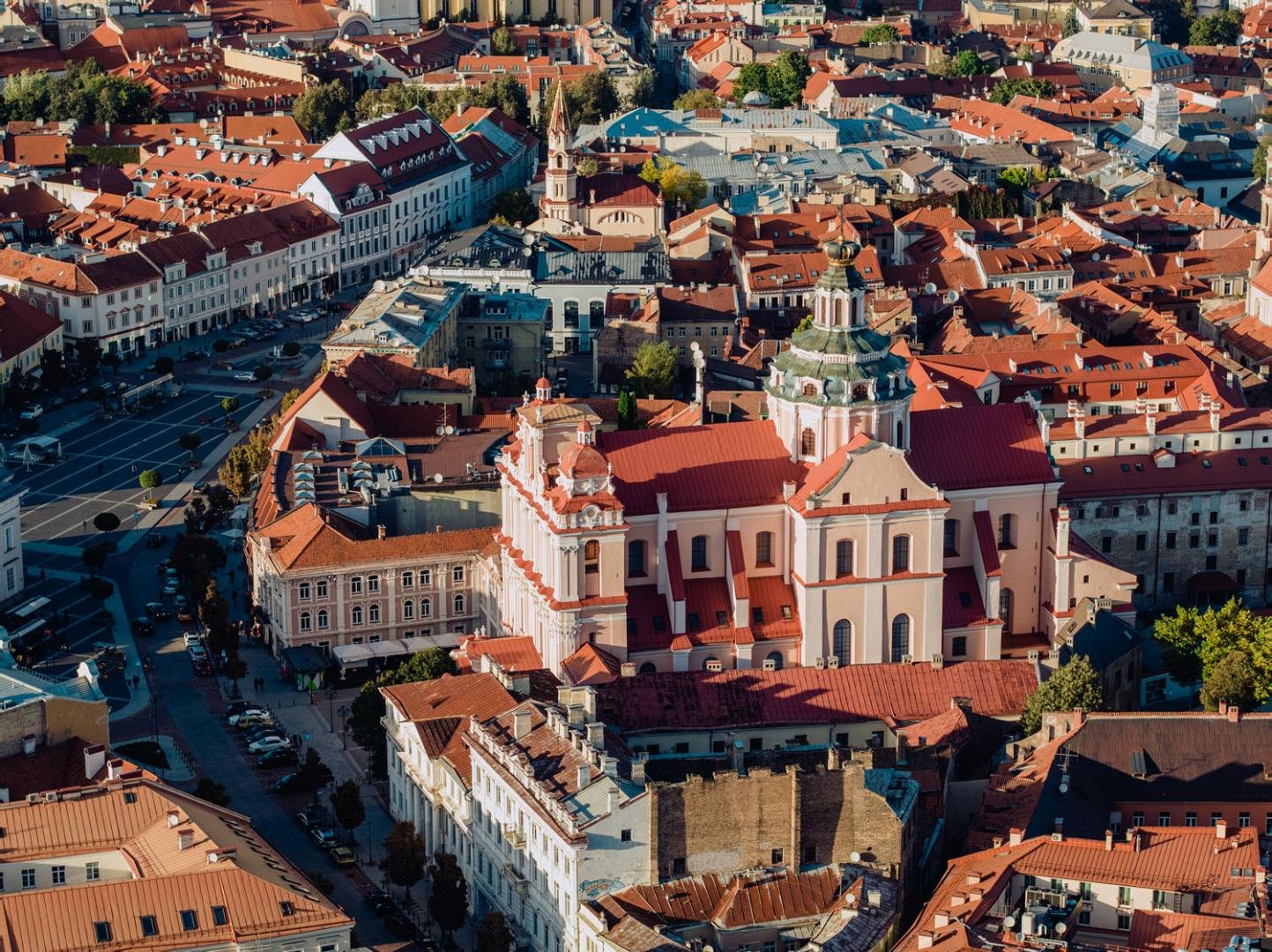
Lithuania, officially the Republic of Lithuania, is a country in the Baltic region of Europe. It is one of three Baltic states and lies on the eastern shore of the Baltic Sea, bordered by Latvia to the north, Belarus to the east and south, Poland to the south, and the Russian semi-exclave of Kaliningrad Oblast to the southwest, with a maritime border with Sweden to the west. Lithuania covers an area of 65,300 km2 (25,200 sq mi), and has a population of 2.9 million. Its capital and largest city is Vilnius; other major cities include Kaunas, Klaipėda, Šiauliai and Panevėžys. Lithuanians are the titular nation, belong to the ethnolinguistic group of Balts, and speak Lithuanian.
- Population: 2,800,000+
- Area: 65,300 km²
- Coordinates: Latitude: 54.683334350586, Longitude: 25.316667556763
- Timezone: Timezone info not available
- Current Local Time: ailab
Latest Lithuania News
15min.lt RSS - suprasti akimirksniu | RSS
Žiniasklaida: išpuoliu „FlyDubai“ lėktuve įtariamam pilotui Omane buvo uždrausta skraidyti
Į Izraelį skridusio oro bendrovės „FlyDubai“ lėktuvo kapitoną užpuolusiam antrajam pilotui anksčiau Omane buvo uždrausta skraidyti dėl nuogąstavimų, susijusių su jo ekstremistinėmis pažiūromis, pranešė kelios žiniasklaidos priemonės.
15min.lt RSS - suprasti akimirksniu | RSS
Prieš rinkimus Brazilijoje JAV ir Australija dėl saugumo stabdo konsulines paslaugas
JAV konsulinės įstaigos ir Australijos ambasada Brazilijoje penktadienį, likus dviem dienoms iki šalies prezidento rinkimų, dėl saugumo sumetimų sustabdė veiklą, pranešė abiejų šalių pareigūnai.
BBC News
Russia strikes second major bridge in Kyiv, mayor says
The strike on Northern Bridge comes after repeat attacks on another major bridge in recent days.
BBC News
Spanish PM Sánchez loses key housing crisis vote after eviction of woman, 87
The defeat raises pressure on Sánchez to call a snap election, after a series of scandals affecting his party and allies.
BBC News
G7 to release millions of barrels of oil and diesel after Trump threat
The co-ordinated release is aimed at heading off further price spikes and avoiding a ban on US diesel exports.
BBC News
UK diesel prices top £2 a litre for first time, RAC says
The rise in global oil prices has been pushing up the pump prices of petrol and diesel in the UK.
POLITICO
Wie Russland die NATO provoziert. Mit Carlo Masala
Listen on Spotify Apple Music Amazon Music Eine Drohne mit Sprengstoff an einer ukrainischen Frachtmaschine in Leipzig, Explosionen in Munitionsfabriken und Sabotage auf See. Russland intensiviert seine hybride Kriegsführung mitten in Europa und testet gezielt die roten Linien der NATO. Doch was passiert, wenn ein solcher Anschlag auf deutschem Boden tatsächlich gelingt und den Bündnisfall auslöst? Darüber spricht Gordon Repinski in dieser Folge mit Carlo Masala, Professor für Internationale Politik, Universität der Bundeswehr München. Das Ziel des Kremls ist es, Panik zu schüren und die westliche Unterstützung für die Ukraine zu brechen. Im Gespräch analysiert Carlo, warum Putin gerade jetzt risikofreudiger wird und weshalb Friedrich Merz in der deutschen Debatte als entscheidender Schutzwall für weitere Hilfen gilt. Ein Wegbrechen dieser Unterstützung hätte fatale finanzielle und militärische Folgen für den gesamten Kontinent. Gleichzeitig wächst der Druck auf Kiew massiv. Die Episode beleuchtet, wie eine mögliche Rückkehr von Trump ins Weiße Haus die Ukraine zu schmerzhaften Deals zwingen könnte und warum das europäische Superwahljahr 2027 Moskau eine beispiellose Chance bietet, die politische Landschaft endgültig zu seinen Gunsten zu drehen. Das Berlin Playbook als Podcast gibt es jeden Morgen ab 5 Uhr. Rixa Fürsen, Maximilian Stascheit und das POLITICO-Team liefern Politik zum Hören – kompakt, international, hintergründig. Für alle Hauptstadt-Profis: Der Berlin Playbook-Newsletter bietet jeden Morgen die wichtigsten Themen und Einordnungen. Jetzt kostenlos abonnieren. POLITICO Deutschland – ein Angebot der Axel Springer Deutschland GmbHAxel-Springer-Straße 65, 10888 BerlinTel: +49 (30) 2591 0information@axelspringer.deSitz: Amtsgericht Berlin-Charlottenburg, HRB 196159 BUSt-IdNr: DE 214 852 390Geschäftsführer: Christoph Eck-Schmidt, Carolin Hulshoff Pol, Mathias Sanchez Luna
POLITICO
Latvian PM faces bittersweet victory in election backdropped by Russia
RIGA — Latvia’s populist Prime Minister Andris Kulbergs will face his first electoral test Saturday — but his head start in the polls is unlikely to shield him from coalition headaches in a contest where Ukraine and Russia are looming large. After a campaign partially fought in Brussels’ corridors, Kulbergs could see two of his allied parties fail to reach the 5% threshold to get seats. And if his centrist allies fail to make it into parliament, the pro-Ukraine prime minister might struggle to get enough backing. In this worst-case scenario, he may even need to open talks with Ainārs Šlesers, a right-wing veteran of Latvian politics who opposed restrictive tariffs on Russia. But Kulbergs, who took office in May after his predecessor, Evika Siliņa, was engulfed in backlash over stray Ukrainian drone strikes, dismissed this idea as speculation, as he is aiming to keep Latvia among the EU’s Russia hawks. Latvian politics spilled into Brussels last week, when a push from France, Luxembourg and Slovakia to delist two Russian billionaires from the EU sanctions list turned into a standoff between Paris and Riga. Latvia was the last holdout in a decision requiring agreement from all 27 member countries. Kulbergs filmed social media vlogs ranting about the proposed delistings, which would free up the European holdings of the men in question and allow them to travel to the bloc. In the end, he lost lost that battle, if only partially. Despite the tycoons being delisted, the overall sanctions regime with almost 3,000 listings is now locked in for three years — a massive achievement considering EU capitals hitherto had to agree every six months. Latvia also said it would start negotiating with France on enhancing military cooperation and initiate talks on Paris’ nuclear deterrence initiative. Kulbergs’ expected win on Saturday might be just as bittersweet, despite his right-wing United List party polling in first place at around 20% — a good showing in Latvian parliamentary politics. His center-right partners, New Unity, are struggling to cross the 5% electoral threshold, which would be a floundering performance for a party that has been home to many Latvian prime ministers, including current European Commissioner Valdis Dombrovskis. But for the party’s prime ministerial candidate and ex-Finance Minister Arvils Ašeradens, the low polling numbers are simply the “political pendulum which shifts from one way to the other,” he told POLITICO in Riga last month. During the last election in 2022, New Unity was the major beneficiary of a rally-round-the-flag moment as Russia had just launched its full-scale invasion of Ukraine. But in 2026, voters seem frustrated with Latvia’s high inflation, the ongoing uncertainty surrounding national airline airBaltic and instrumentalized migration orchestrated by Russia and Belarus. The prime minister may need to open talks with Ainārs Šlesers, a right-wing veteran of Latvian politics. | Robert Hegedus/EPA Kulbergs’ other coalition partner, the agrarian Union of Greens and Farmers (known as ZZS), is also polling below the threshold. And if neither party manages to scrape by, it might force Kulbergs to work with the controversial businessman Šlesers, who carefully advocated expanding trade with Russia. Kulbergs has dismissed this possibility — “as it is given now: no,” he told POLITICO in early September — because he does not trust the people Šlesers has surrounded himself with. Just weeks earlier, however, he had been less definitive, telling POLITICO in July: “I have to see what chess pieces I will get … to make a coalition.” Šlesers has been a central figure in Latvian politics for decades, most notably as a local “oligarch” who, via family holdings, exerts influence over the Port of Riga. The capital’s harbor has seen its largely Russian and Belarusian hinterland slowly carved off by EU sanctions. And after Kulbergs slapped 300% tariffs on transited Russian grain this month , Šlesers told Latvian national TV such transit should be allowed, though he supports Ukraine’s EU accession. Šlesers had distanced himself from politics for a time, after he was caught on tape plotting to divvy up influential posts with fellow oligarchs about 15 years ago. But he has now captured part of the Russian-speaking vote with his conservative-populist rhethoric. For Latvian political scientist Una Bergmane at the University of Helsinki, there is a clear scenario where Šlesers, a former transport minister, ends up in government. “There is a possibility: If ZZS makes it into the parliament then there might be a temptation [for Kulbergs] to do something with ZZS and Šlesers.” But it’s not all doom and gloom for the prime minister. Last week’s sanctions standoff could prop him and his New Unity partners up, said Bergmane. “[Foreign Minister Baiba] Braže is the most positively recognizable New Unity member, so everything she does helps the party, but at this point Kulbergs gets most visibility anyway,” she explained. Kulbergs’ short time in office could play in his favor too. The prime minister and his party, Bergmane said, are in “this very, very comfortable place where they haven’t been in power for a long time” but still hold the most influential office in the country of 1.9 million.
Al Jazeera – Breaking News, World News and Video from Al Jazeera
Singer Zach Bryan wears Free Palestine shirt at Gillette Stadium
US singer Zach Bryan wore a ‘Free Palestine’ shirt while performing at Gillette Stadium, owned by Robert Kraft.
Al Jazeera – Breaking News, World News and Video from Al Jazeera
India vs Pakistan live: Asian Games cricket final
Follow our live score and text commentary from the gold-medal match as Pakistan chase 212 to win in Japan.
Europe
The right and wrong lessons to learn from Spain’s housing crisis
Evictions and spiralling rents are the symptom, not the underlying disease
Europe
Rising gilt yields attract retail investors hunting for tax-efficient assets
30-year yields are above 6 per cent for the first time since 1998
France 24 - International breaking news, top stories and headlines
Russia strikes another major bridge across Kyiv's Dnipro river
Kyiv's Northern Bridge across the Dnipro river was hit by a Russian air attack, Mayor Vitali Klitschko said Saturday, amid an escalation in strikes on infrastructure in the Ukrainian capital. The attack comes a day after the Southern Bridge was hit by several strikes that city officials said were "tearing Kyiv apart".
France 24 - International breaking news, top stories and headlines
UAE investigators say Omani Flydubai co-pilot was planning 'terrorist' attack
The Omani co-pilot accused of attacking the captain aboard a Flydubai flight to Israel on September 30 attempted to carry out a "terrorist" attack, the United Arab Emirates prosecutor general said Saturday. The alleged assailant, identified as Omani national Hamam al-Hammami, had been barred from flying in his country due to his radical ideological views, several media reported.
Africanews RSS
43 killed in political hits ahead of S.Africa polls: report
Suspected political assassinations in South Africa have claimed at least 43 lives this year to September, with local government elections still one month away, a report said Friday
Africanews RSS
At least 5,700 killed, wounded in Haiti gang crisis this year: UN
Haiti's gang violence crisis has left at least 5,700 people dead or wounded this year while more than 1,000 women and girls have been raped, UN human rights chief Volker Turk said Friday